Voyager 1's 50-Year-Old Instrument Turned Off to Conserve Power, NASA Says
Historic Shutdown to Preserve Deep Space Mission
PASADENA, CA – NASA engineers have powered down a 49-year-old instrument aboard Voyager 1 in a drastic bid to keep the spacecraft operational. The move comes as the probe's plutonium power source dwindles to critically low levels.
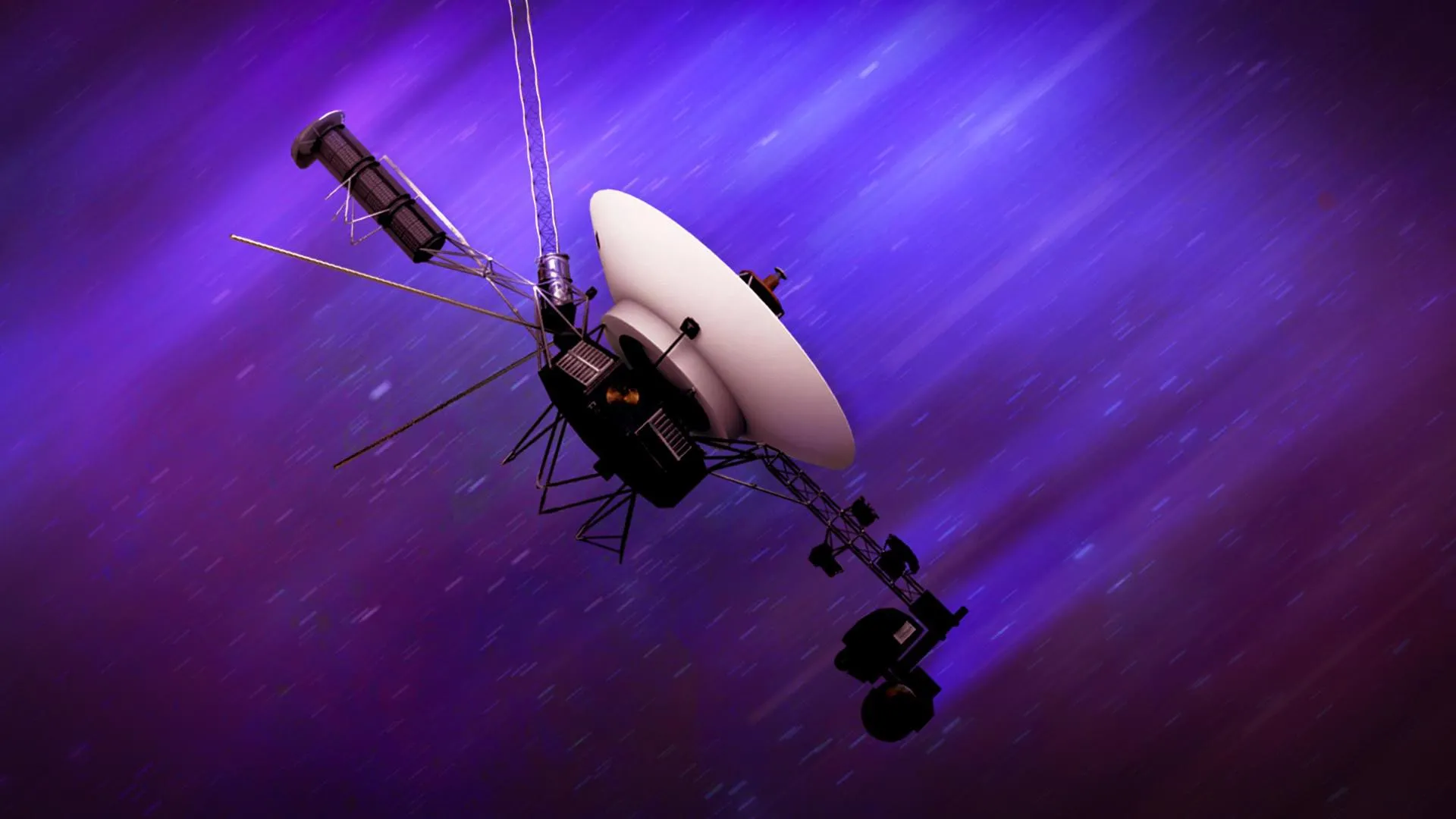
“We had to make the difficult decision to turn off one of its oldest instruments to stretch the remaining energy,” said Dr. Linda Spilker, Voyager project scientist at NASA's Jet Propulsion Laboratory. “Every watt counts when you're running on fumes.”
The instrument, a cosmic ray subsystem designed to measure high-energy particles, was activated in 1977 and has been providing unique data from beyond the solar system for over a decade. Despite the shutdown, Voyager 1 continues to transmit valuable information from interstellar space.
Background
Launched on September 5, 1977, Voyager 1 is the farthest human-made object from Earth, currently about 15 billion miles away. It carries a nuclear battery that slowly loses output—about 4 watts per year—as its plutonium-238 decays.
NASA has been carefully prioritising which systems stay on. The spacecraft originally had 11 instruments; now only four remain active. Engineers chose to sacrifice the cosmic ray detector because it overlaps with data from another still-functioning instrument.
“We're essentially rationing power to keep the mission alive as long as possible,” explained Dr. Spilker. “This shutdown buys us a few more months of science.”
What This Means
The shutdown is a stark reminder of Voyager 1's aging hardware and finite energy budget. Without drastic measures, the spacecraft could become a silent monument within a few years.
However, NASA is exploring a bold plan to revive the instrument later by temporarily increasing power to certain systems. Engineers are also testing software patches that could allow the twin Voyager 2 to operate more efficiently.
“Losing an instrument is painful, but it's better than losing the whole spacecraft,” said Dr. Spilker. “Every day beyond 47 years is a bonus, and we intend to squeeze every second of science out of it.”
Revival Plan Under Study
The team is considering a risky strategy: briefly powering up the dormant instrument during periods of lower power demand. This would require precise timing and could risk overheating other components.
“It's a gamble, but if it works, we might get another year of data from that instrument,” said Voyager mission manager Suzanne Dodd. “We're not giving up yet.”
The decision underscores the tension between preserving history and advancing science. Voyager 1 carries the Golden Record, a message to extraterrestrials, and its continued operation is a symbol of human exploration.
For now, the spacecraft will focus on its remaining four instruments, studying interstellar magnetic fields, plasma waves, and charged particles. Scientists hope the energy savings will allow Voyager 1 to transmit data into the 2030s.
Related Articles
- STMicroelectronics Bets Big on Satellite Boom: $3 Billion Revenue Target from LEO Chips
- Geosynchronous Showdown: Russia Joins US and China in Secretive Satellite Inspection Race
- 10 Cloud Phenomena That Wrote Alaska’s Winter’s End
- How to Submit Quality Bug Bounty Reports to GitHub (and Avoid Common Pitfalls)
- Hybrid AI Development Surges as Enterprises Bridge Low-Code and Full-Code Divide
- How to Analyze Cyclone-Triggered Landslides in Tropical Forests
- The Moon's Influence on Nocturnal Migratory Birds: A Q&A
- How Plants Evolved into 'Hopeful Monsters' During Earth's Worst Crises