Clean Room Upgrades Pave the Way for Roman Space Telescope Processing at Kennedy
NASA's Nancy Grace Roman Space Telescope is one step closer to launch with the arrival of critical ground support equipment at the agency's Kennedy Space Center in Florida. On April 27, technicians at the Payload Hazardous Servicing Facility (PHSF) received eight high-efficiency particulate air (HEPA) wall modules and other gear designed to maintain ultra-clean conditions for the observatory. These upgrades ensure the telescope meets strict cleanliness standards during preparations, including fueling and final checks, before its scheduled launch atop a SpaceX Falcon Heavy rocket. In this Q&A, we explore the purpose of this new equipment, the telescope's scientific goals, and what lies ahead for this ambitious mission.
What equipment arrived at Kennedy Space Center for the Roman Space Telescope?
On April 27, technicians at NASA's Payload Hazardous Servicing Facility (PHSF) at Kennedy Space Center offloaded eight HEPA wall modules and additional ground support equipment. Each module weighs approximately 1,800 pounds and is designed to enhance the clean room environment within the PHSF. The modules work by filtering airborne particles, ensuring the facility meets the stringent cleanliness requirements necessary for handling a sensitive space telescope. This equipment is part of a broader upgrade to prepare the facility for the Roman mission's processing needs.
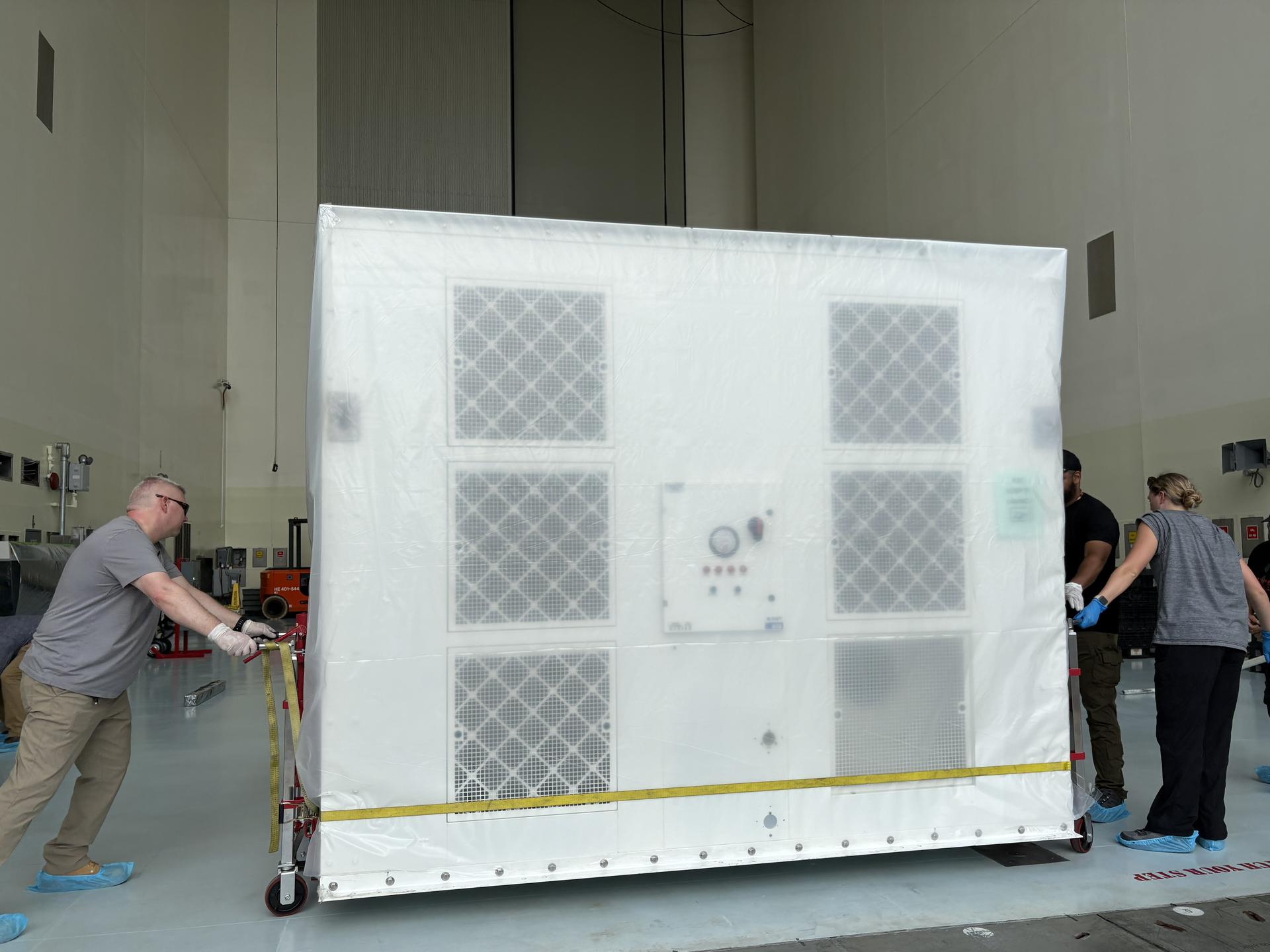
Why are HEPA wall modules critical for the Roman Space Telescope?
The Roman Space Telescope must be kept exceptionally clean to avoid contamination that could interfere with its sensitive instruments. The eight HEPA wall modules bolster the PHSF's clean room systems by continuously filtering out dust, microbes, and other particles. Without such precautions, even microscopic debris could scatter infrared light or settle on optics, compromising the telescope's ability to observe the cosmos. During its stay in the facility, Roman will undergo key operations like spacecraft fueling, which require an ultra-pure environment. The modules' high efficiency ensures that air quality remains within tolerance, protecting the $3.2 billion observatory.
What will happen to the Roman Space Telescope at the Payload Hazardous Servicing Facility?
Inside the PHSF, the Roman Space Telescope will undergo a series of critical prelaunch tasks. Among the most important is spacecraft fueling, where propellant is loaded into the vehicle's tanks. Technicians will also perform final inspections, test subsystems, and integrate any remaining components. The newly installed HEPA wall modules will maintain a pristine environment throughout these procedures, minimizing contamination risks. The facility's clean room is designed to handle hazardous operations safely, as its name suggests. Once all processing is complete, the telescope will be transferred to Launch Complex 39A for integration with the Falcon Heavy rocket.
How will the Roman Space Telescope observe the universe?
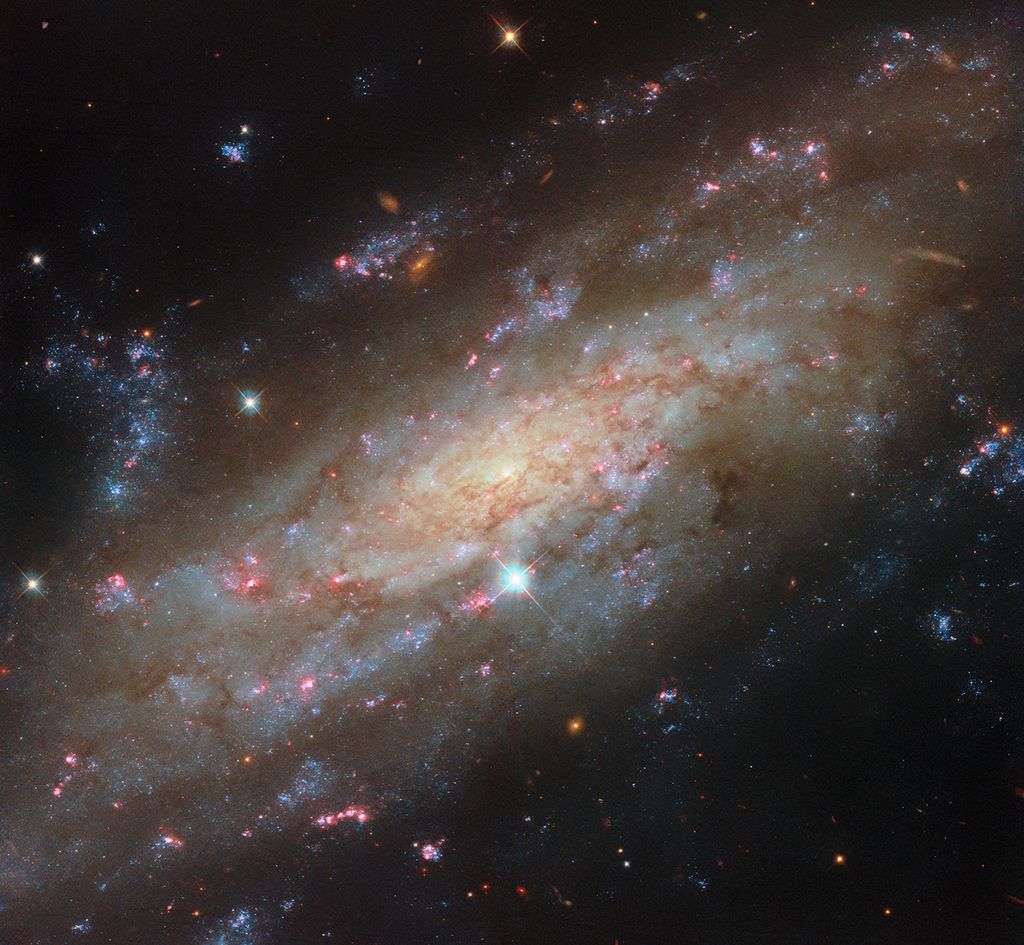
Roman will observe the universe in infrared light, using two primary instruments. The Wide Field Instrument provides a panoramic view of the sky, capturing images 100 times larger than Hubble's infrared camera in a single exposure. This wide field allows astronomers to survey vast areas efficiently. The Coronagraph Instrument is a technology demonstration that blocks starlight to directly image exoplanets. By combining these tools, Roman will study everything from dark energy to exoplanet atmospheres, revealing details about the universe's structure and evolution.
What cosmic mysteries will Roman investigate?
Roman's broad capabilities make it a versatile observatory. It will address one of astronomy's biggest questions: why is the universe's expansion accelerating? By mapping the distribution of galaxies and measuring supernovae, Roman will chart how dark energy has influenced cosmic history. It will also advance exoplanet science by directly imaging gas giants and studying their atmospheres. Additionally, Roman will map dark matter through gravitational lensing, revealing the invisible framework that shapes galaxies. For more details, see how Roman observes.
When and where is the Roman Space Telescope launching?
NASA and its partners are targeting launch as soon as early September. The Roman Space Telescope will lift off aboard a SpaceX Falcon Heavy rocket from Launch Complex 39A at Kennedy Space Center in Florida. This powerful rocket, capable of heavy payloads, is necessary to send the 4.6-ton observatory to its destination at the Sun-Earth L2 Lagrange point. The exact date will be refined as processing milestones are completed. Photo credit: NASA/Leejay Lockhart.
Related Articles
- Expert Reveals Science-Backed Strategies to Thrive Amid Change: Stay Grounded, Optimistic, and Purposeful
- Squid and Cuttlefish Survived Mass Extinctions by Retreating to Deep-Sea Oxygen Havens, New Study Reveals
- Decoding Semantic Search: A Practical Guide to Vector Databases vs. Traditional Text Search
- 5 Reasons the Galaxy S26 Ultra’s Screen Didn’t Work for Me
- Unveiling the Secrets of Metallocene Formation: A Q&A Guide
- Laser Communications Revolutionize Artemis II Broadcast: NASA Terminal Delivers Stunning HD Views from Deep Space
- Inside the 7-Day Fast: How Your Body Reinvents Itself
- Empowering AI Agents with Secure Desktop Access: A Step-by-Step Guide to Amazon WorkSpaces for Agents