Creating a Star-Like Plasma from Metal: A Scientist's How-To Guide
Introduction
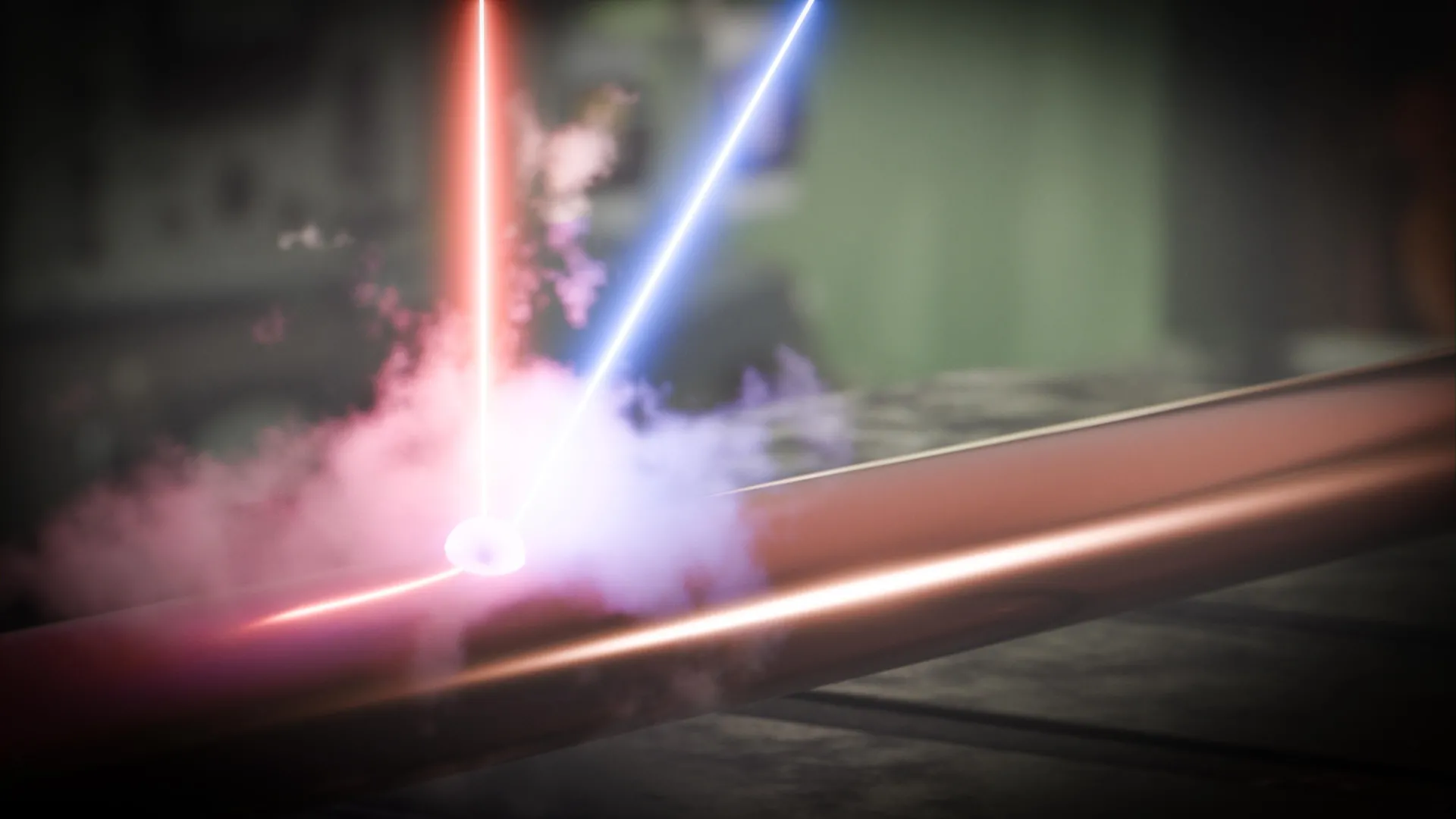
In the quest to understand extreme states of matter, scientists have developed a method to turn a simple piece of metal into a superheated plasma—similar to the conditions found in stars—for just a trillionth of a second. This how-to guide walks you through the exact procedure used in cutting-edge laboratories to create and observe this phenomenon. By combining two powerful lasers, researchers track how copper atoms lose and regain electrons in an ultrafast, cinematic sequence, revealing the fundamental dynamics of highly charged ions. Whether you're a physicist or a curious learner, this step-by-step outline will help you grasp the process and even replicate it in a controlled setting.
What You Need
- Two ultrafast lasers – one high-energy pump laser (to create the plasma) and one low-energy probe laser (to observe it). Each should be capable of delivering pulses in the femtosecond to picosecond range.
- Copper target – a thin, high-purity foil or solid piece, polished to a smooth surface.
- Vacuum chamber – to prevent air from interfering with the plasma formation and to maintain a clean environment.
- Detectors – X-ray spectrometer and optical sensor to capture emitted radiation and track electron behavior.
- Precision timing system – to synchronize the pump and probe lasers with attosecond accuracy.
- Data acquisition and analysis software – to record, process, and visualize the rapid changes.
- Safety gear – laser goggles, shielding, and proper ventilation for high-energy experiments.
Step-by-Step Guide
Step 1: Set Up the Lasers and Vacuum Chamber
Begin by positioning the two lasers on an optical table. The pump laser must be aligned to deliver a focused, high-intensity beam onto the copper target, while the probe laser beam should intersect the plasma plume at a right angle or a shallow angle for optimal observation. Place the copper target inside the vacuum chamber and seal it, then pump the chamber down to a pressure below 10-6 torr to minimize collisions with air molecules.
Step 2: Align the Target and Laser Beams
Use alignment tools (e.g., beam profilers and cameras) to ensure the pump laser hits the exact same spot on the copper target with each pulse. The spot size should be around 10-50 micrometers to achieve the necessary energy density. Then, align the probe laser to pass through the resulting plasma plume, about 100-500 nanoseconds after the pump pulse (depending on the expansion dynamics). Fine-tune the timing using a delay generator.
Step 3: Calibrate the Timing with the Probe Laser
Set the delay between the pump and probe lasers. For this experiment, the pump laser initiates the plasma, and the probe laser arrives later to 'take a snapshot' of the electron state. The delay can be adjusted in steps of a few femtoseconds to map the entire evolution. Use a fast photodiode and an oscilloscope to verify the relative timing.
Step 4: Fire the Pump Laser to Create the Plasma
Activate the pump laser with a single pulse. The intense light (focused to >1014 W/cm2) instantly ablates the copper surface, stripping electrons from atoms and forming a hot, dense plasma. The temperature can exceed 10,000 Kelvin, creating conditions similar to stellar interiors. This plasma expands outward rapidly, containing highly charged ions like Cu10+ and Cu20+.
Step 5: Use the Probe Laser to Capture Electron Dynamics
At the precise delay set earlier, fire the probe laser. Its beam interacts with the expanding plasma, causing absorption or scattering that reveals the charge state distribution and electron density. A spectrometer (X-ray or optical) records the spectrum emitted by the recombining ions. By repeating the experiment at different delays, you build a movie of how electrons are lost and recaptured over time.
Step 6: Record and Analyze Data
Use the data acquisition system to record the spectral signals from each laser shot. Compare the results to theoretical models to understand the ionization and recombination rates. Look for signature peaks corresponding to specific copper ions—these indicate the transient, highly charged states that exist for only trillionths of a second. Plot the intensity vs. time to visualize the 'cinematic sequence' of electron capture and release.
Step 7: Repeat and Validate
Perform multiple runs (hundreds or thousands) at varying delays and laser intensities to ensure reproducibility. Calibrate the detectors with known sources. If possible, cross-check with simulations to confirm that the observed plasma behavior matches expected star-like conditions.
Tips for Success
- Safety first: High-power lasers can cause severe injury. Always wear appropriate laser-safe goggles, set up barriers, and use remote operation when possible.
- Precision alignment: Even a tiny misalignment can ruin the plasma formation or the probing. Use motorized mounts with fine adjustments and feedback loops.
- Vacuum quality: A poor vacuum leads to background gas ionization, which contaminates the signal. Ensure the chamber is leak-free and pumped for several hours before experiments.
- Minimize vibrations: Place the optical table on vibration isolation legs. Even footsteps can shift the beam. Encase the setup in a plexiglass box if needed.
- Data management: Each shot generates a large data file. Use automated scripts to label, compress, and store data. Back up regularly.
- Calibration curves: Before the main experiment, fire the lasers at a test target with known plasma properties (e.g., aluminum) to verify the detection system.
- Collaborate: This is a complex measurement—work with a team where each person handles one part: laser operation, data analysis, and safety oversight.
By following these steps, you can recreate the remarkable process of turning a solid metal into a star-like plasma in just a trillionth of a second. This technique not only advances our understanding of extreme physics but also opens doors to new applications in materials science and fusion research.
Related Articles
- Quantum Leap: Computing with Hybrid Light-Matter Particles
- Unveiling the Cosmic Web: First Detailed Image of Intergalactic Highways
- AI Now Powers Over a Third of New Websites, Landmark Study Reveals
- How Coffee Reshapes Your Gut and Brain: A Practical Guide to Harnessing Its Benefits
- Revolutionary Discovery: Fat Metabolism Protein Found to Have Two-Faced Role in Obesity
- From Concept to Greenlight: A Guide to Apple TV’s Latest Action Thriller Series
- Massive Cambrian Fossil Discovery Reshapes Understanding of Early Animal Evolution
- How to Execute the Artemis III Rendezvous and Docking Test Mission: A Step-by-Step Guide