IBM Vault 2.0: A Deeper Look at the New UI and Reporting Capabilities
IBM Vault 2.0 introduces significant UI enhancements and improved reporting visibility, making secrets management more accessible. This Q&A explores the key features designed to streamline onboarding and boost operational transparency.
What drove the development of IBM Vault 2.0?
The development of IBM Vault 2.0 was driven by a clear goal: to make Vault easier to use, reducing the need for extensive external resources. Previously, users had to consult disparate documentation, developer guides, and community content to master Vault. The team recognized that becoming a Vault expert required accessing knowledge not contextualized within the product. With Vault 2.0, they holistically reassessed the user experience, focusing on two pillars: helping customers easily discover and understand features, and enabling quick adoption with best practices. The aim is to allow customers to onboard without needing a deep background in Vault, matching features intuitively to user problems rather than requiring expertise.
What are the main UI enhancements in IBM Vault 2.0?
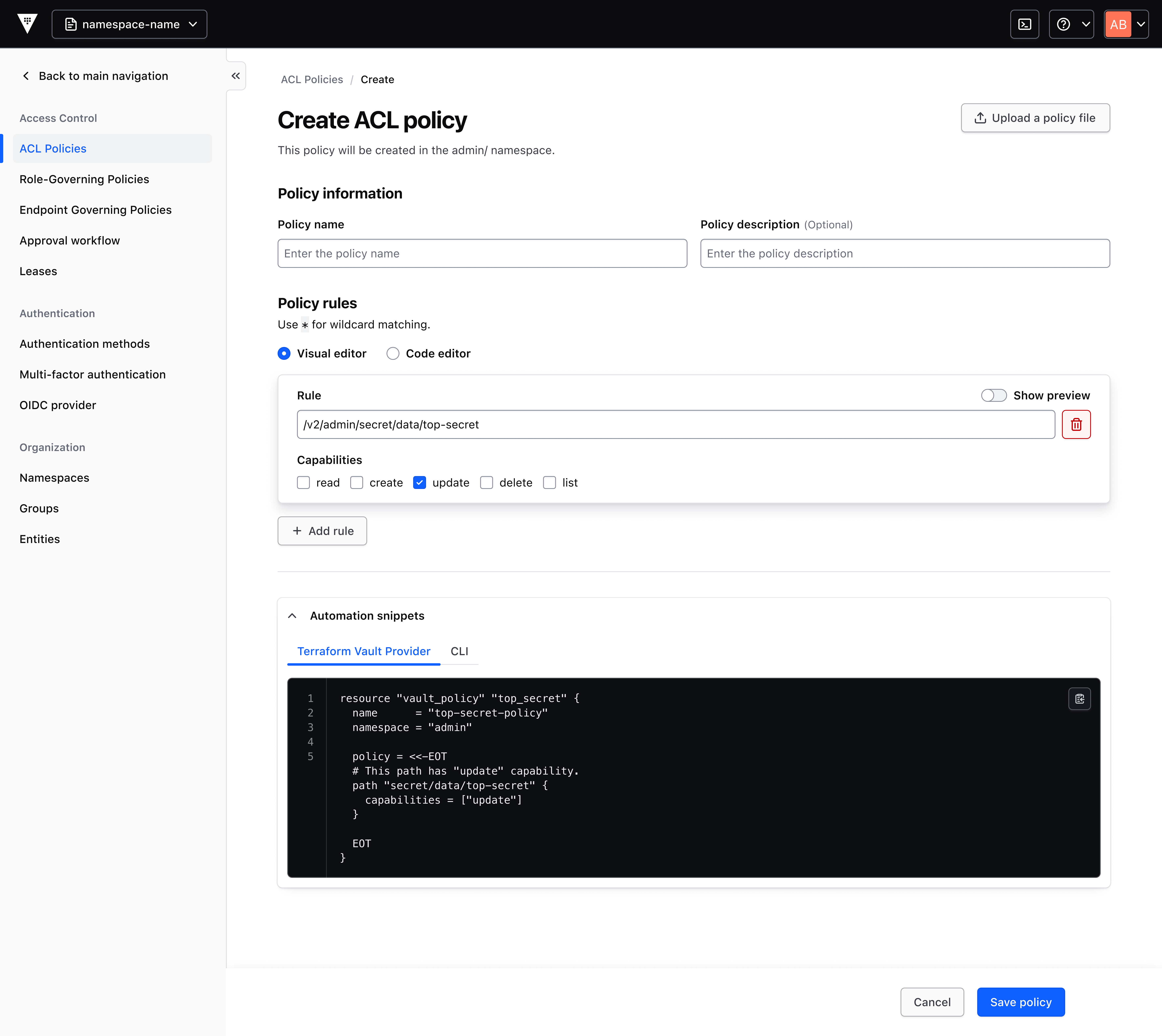
IBM Vault 2.0 includes several key UI enhancements: a visual policy generator that provides pre-filled forms to generate policy snippets; an onboarding wizard that asks simple questions and produces editable code snippets; introductory pages for both new and existing features, offering value details and quick-start actions; and a revamped navigation bar that groups features by customer problems. These improvements are designed to center the customer experience and contextualize features, making it simpler for users to find the right tools and adopt them efficiently.
How does the visual policy generator simplify policy creation?
New Vault users have no permissions by default. Assigning permissions to use any feature or resource requires writing custom policy code, which can be an operational burden and barrier to adoption. The visual policy generator in Vault 2.0 solves this by offering a contextual UI form that pre-fills best-practice policies. Users can generate policy snippets directly from the form, which can then be copied for use in the Terraform Vault Provider (recommended) or saved to the Vault cluster. This tool reduces the need for manual coding, lowers the learning curve, and helps administrators quickly grant appropriate access, thereby accelerating feature adoption across teams.
How does the onboarding wizard help new users?
The onboarding wizard is designed to guide new users through initial configuration with a conversational approach. It starts by asking simple questions about how the user intends to use a feature – for example, their use case for secrets management or identity brokering. Based on the answers, the wizard automatically generates an editable code snippet tailored to that usage. This snippet serves as a starting point that users can customize, allowing them to implement best practices without needing deep prior knowledge. The wizard effectively bridges the gap between user intent and actual Vault configuration, making the onboarding process much smoother and less intimidating.
How does the revamped navigation bar improve the user experience?
The navigation bar in IBM Vault 2.0 has been completely reorganized. Instead of grouping features by technical categories, the new layout groups them by customer problems. For example, options related to secrets management, key lifecycle management, identity brokering, and data protection are clustered under intuitive headings that reflect what users typically want to achieve. This customer-centered approach reduces the cognitive load on users, as they no longer have to search through documentation to map Vault’s terminology to their needs. The revamped navigation helps users quickly locate the right features, enabling faster task completion and improving overall productivity.
What improvements in reporting and visibility does Vault 2.0.1 offer?
IBM Vault 2.0.1 enhances reporting and visibility into consumption across all key areas: secrets management, key lifecycle management, identity brokering, and data protection. These improvements provide greater transparency into usage patterns, enabling teams to understand how Vault is used throughout the organization. With clearer data, teams can improve operational visibility, support forecasting and planning, and strengthen governance initiatives. The reporting features help administrators identify trends, optimize resource allocation, and ensure compliance with internal policies. Overall, these updates give organizations actionable insights to better manage their secrets and security operations.
How do the introductory pages assist users in discovering features?
Introductory pages have been added for both new and existing features in Vault 2.0. Each page details the feature’s value add and includes helpful context, such as common use cases and limitations. More importantly, these pages offer a recommended quick-start action, so users can immediately try out the feature with minimal effort. By presenting information in a structured, contextual manner, introductory pages reduce the need to consult external documentation. They empower users to quickly understand what a feature does and how to apply it to their own challenges, accelerating feature discovery and adoption across the platform.
Related Articles
- Mastering Data Normalization for Consistent Machine Learning Performance: A Step-by-Step Guide
- A Practical Guide to Building Reliable Multi-Agent AI Systems with Open Protocols
- NVIDIA CEO Tells Graduates: AI Revolution Is Your Career Launchpad
- Decoding Language from Brain Waves: A Modern NeuroAI Pipeline Using MEG and Deep Learning
- Navigating Microsoft's New Professional Certificates on Coursera: A Complete Guide to AI, Data, and Development Pathways
- Proactive Infrastructure Awareness: How Grafana Assistant Pre-Builds Context for Faster Troubleshooting
- AI Horse Racing Prediction: How a Developer Built a Real-Time Payout Engine
- Getting Started with Django: A Practical Overview of Its Key Features