Spotify Unveils Conversational AI Tool for Ad Campaign Management via Claude Integration
Breaking News — Spotify Engineering today announced the launch of a natural language interface for its Ads API, developed using Claude Code Plugins from Anthropic. The tool allows advertisers to manage campaigns through conversational prompts, eliminating the need for compiled code or manual API calls.
"This is a paradigm shift for digital advertising," said Dr. Lena Torres, Spotify’s lead API architect. "Advertisers can now simply say, 'Show me performance for my Friday campaign' and get real-time data without writing a single line of code."
What Was Announced
The interface converts the existing Spotify Ads API—defined by an OpenAPI specification and Markdown documentation—into a conversational assistant. It uses Claude’s code-reading and generation capabilities to interpret user intent and execute the appropriate API endpoints.
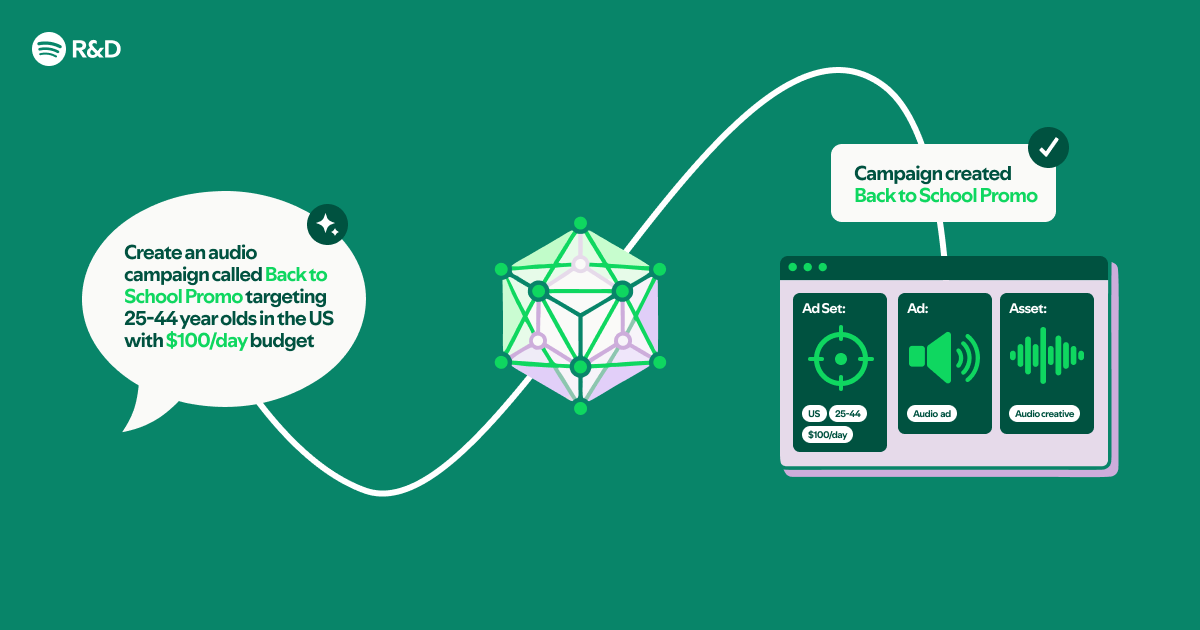
"We basically gave Claude the API spec and let it become a 'plug-in' that understands ad operations," explained Dr. Torres. "No compiled code was written. It’s all dynamic, driven by Claude’s ability to parse the documentation."
Background
Spotify’s Ads API has long empowered brands to programmatically buy audio and video ads, but it required developers to write and maintain custom integrations. Many smaller advertisers found the technical barrier too high, limiting access to Spotify’s advertising ecosystem.
The Spotify Ads API (documentation) includes dozens of endpoints for campaign management, audience targeting, and reporting. Traditional use demanded JSON payloads and authentication flows. Engineers often spent weeks building and testing clients.
Claude Code Plugins, released by Anthropic in early 2025, allow AI models to execute code and interact with external services. Spotify’s team seized on that capability to create a no-code natural language layer over the existing API.

How It Works
Advertisers input plain-language commands—for example, "Increase budget by 15% for the next 7 days" or "Pull impressions for last month across all campaigns." Claude interprets the request, maps it to the correct API call, and executes it in real time.
The system also validates commands against the API’s rules and provides confirmations or error messages in human-readable form. "The conversational nature reduces the learning curve to nearly zero," noted Samira Okafor, a product manager at Spotify who oversaw the project.
What This Means
This development could democratize programmatic advertising on Spotify, making it accessible to marketing teams without dedicated engineering support. Instead of filing tickets with developers, campaign managers can adjust bids and access analytics through a chat interface.
Industry analyst James Chen of AdTech Insights called it "a major step toward AI-native ad platforms." He added, "If Spotify proves this works, expect every major ad platform to follow with similar natural language integrations."
Spotify has not yet announced a public release date, but internal testing is underway with a select group of enterprise advertisers. The company is also exploring whether the same approach can be applied to other platform APIs, such as its Podcast Ads API.
This is a breaking story. More details will follow.
Related Articles
- New Python Framework Guarantees Type-Safe LLM Agents, Eliminating Unstructured Output
- Kubernetes 1.36 Ushers in Declarative Validation: A New Era for API Reliability
- Kubernetes 1.36’s Declarative Validation Goes GA: A New Era for API Reliability
- Exploring Jakarta EE: Core Concepts and Practical Insights
- Mastering the Latest Rustup 1.29.0: A Complete Guide to Faster Toolchain Management
- Python Security Response Team: Governance Updates and How to Get Involved
- 10 Key Benefits of Dual Parameter Styles in mssql-python
- Spotify Unveils Conversational Ads API Interface Powered by Claude AI — No Code Required