The Unknowable: How Mathematical Mysteries Power Secret-Keeping
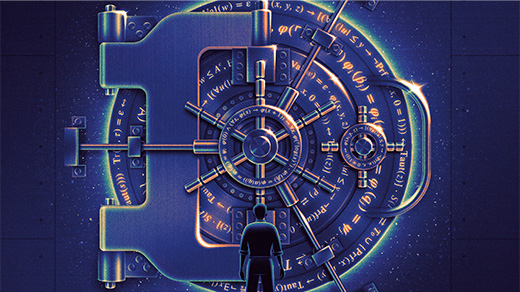
Mathematicians primarily explore the realm of the knowable, yet the unknowable possesses an equally compelling allure. Perhaps the most profound illustration emerges from Kurt Gödel's incompleteness theorems, published in 1931. These landmark results demonstrated that within any consistent set of mathematical axioms, there exist true statements that can never be proven. This inherent limitation of formal systems has surprising applications, especially in the field of cryptography, where the unknowable becomes a tool for hiding secrets.
Gödel’s Incompleteness Theorems
Gödel’s work shattered the dream of a complete, self-contained mathematical foundation. His theorems reveal fundamental boundaries on what can be known through logical deduction alone.
The First Incompleteness Theorem
The first theorem states that for any sufficiently powerful, consistent formal system—such as arithmetic—there exist statements that are true but cannot be proved within that system. These are called undecidable propositions. The classic example is the statement “This statement is unprovable,” which creates a logical paradox: if it’s provable, it’s false; if it’s false, it’s provable. This self-referential nature forces a gap between truth and provability.
The Second Incompleteness Theorem
The second theorem goes further: such a system cannot prove its own consistency. Any attempt to verify that the axioms never lead to a contradiction must rely on a more powerful system, which itself remains unverifiable. This creates an endless regress of unprovable foundations, highlighting the inherent limits of mathematical knowledge.
These results might seem purely theoretical, but they have practical implications, especially in the design of secure communications.
Applying Unknowability to Cryptography
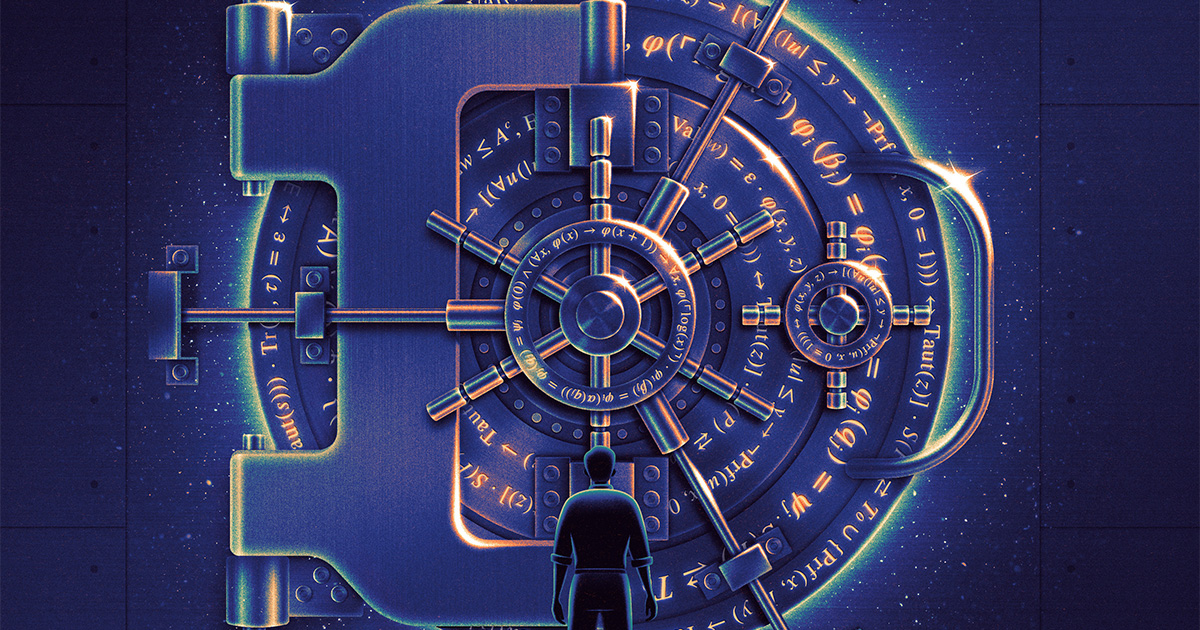
Cryptography relies on problems that are easy to create but hard to solve—essentially, on the unknowable. Gödel’s insights provide a theoretical backbone for these one-way functions.
Zero-Knowledge Proofs
Zero-knowledge proofs allow one party (the prover) to convince another (the verifier) that a statement is true without revealing any information beyond the statement’s validity. This concept echoes Gödel’s undecidable statements: the verifier knows the truth exists but cannot access the underlying proof. For example, a cryptographer can prove they know a password without ever transmitting it, by using a series of challenges that rely on mathematically unknowable elements. This technique is vital for authentication and privacy-preserving protocols.
Randomness and One-Way Functions
One-way functions are easy to compute in one direction but infeasible to reverse. The existence of such functions is not proven, but their security hinges on mathematical problems that are believed to be unknowable—like factoring large integers or solving discrete logarithms. These tasks are analogous to Gödel’s unprovable truths: we can generate and verify them quickly, but finding the reverse takes impractical time. The unknowability of the reverse operation is what keeps data secure.
Furthermore, randomness plays a key role. True randomness is often considered unknowable—it cannot be predicted or reproduced. Cryptographic systems use randomness to generate keys, nonces, and salts, ensuring that attackers cannot deduce secret parameters. The interplay between Gödelian unknowability and computational hardness creates robust secrecy.
The Future of Secret-Keeping
Gödel’s theorems continue to inspire new cryptographic paradigms. Post-quantum cryptography explores hard problems that remain intractable even for quantum computers, often rooted in mathematical structures with deep undecidability properties. Researchers also investigate obfuscation—making code unintelligible while preserving function—which may rely on unprovable statements.
Moreover, the concept of indistinguishability obfuscation aims to create programs that are as hard to understand as Gödel’s undecidable statements. If successful, any function could be hidden in plain sight, with its true purpose forever unknowable to unauthorized parties.
In conclusion, the unknowable aspects of mathematics, far from being mere curiosities, provide a foundation for modern secrecy. From undecidable propositions to one-way functions, Gödel’s legacy empowers cryptographers to build systems that protect information, proving that sometimes what we cannot know is exactly what we need to keep safe.
Related Articles
- Enterprises Face AI 'Operate or Stagnate' Divide as Early Adopters Embrace New Operating Model
- SAP’s AI Tools Miss Adoption Targets as Version 2.0 Arrives Before 1.0 Matures
- Six Obsidian Plugins Drive Users Away from Traditional Note-Taking Apps, Report Finds
- YouTube Opens AI Deepfake Detection to All Users Over 18—Here’s How to Protect Your Face
- Before You Quit Your Day Job: How to Build a Solo Business Without Risking Everything
- Your Step-by-Step Guide to the Top Linux App Updates of April 2026
- New Encryption Frontier: How Gödel's 'Unknowable' Math Protects Data
- How to Avoid Passport Revocation: A Guide to the New Child Support Enforcement Policy