Discovering Beaver Island: A Comprehensive Guide to America's Emerald Isle
Overview
Nestled in the northern reaches of Lake Michigan, the Beaver Archipelago stands as a testament to the immense forces of glacial carving that shaped the Great Lakes over millennia. Among its islands, Beaver Island—often called "America's Emerald Isle"—offers a unique blend of geological wonders, rich cultural history, and pristine natural environments. This guide takes you on a journey to understand the island's origins, its settlement by Irish immigrants, the rise and fall of its fishing industry, and modern opportunities for exploration, including the newly designated International Dark Sky Sanctuary. Whether you're a geology enthusiast, a history buff, a nature lover, or an aspiring stargazer, Beaver Island has something remarkable to reveal.
Prerequisites
Before diving into the details, it's helpful to have a basic familiarity with Great Lakes geography—specifically, the location of Lake Michigan and the Straits of Mackinac. No specialized scientific knowledge is required, but an appreciation for glacial processes will enhance your understanding of the island's formation. For those planning a visit, practical prerequisites include arranging transportation (by boat or plane) and checking seasonal access, as weather can be unpredictable. Additionally, anyone interested in the dark sky sanctuary should prepare for nighttime viewing with minimal light pollution—bring a red flashlight and warm clothing.
Step-by-Step Guide
1. Understanding the Geological Formation
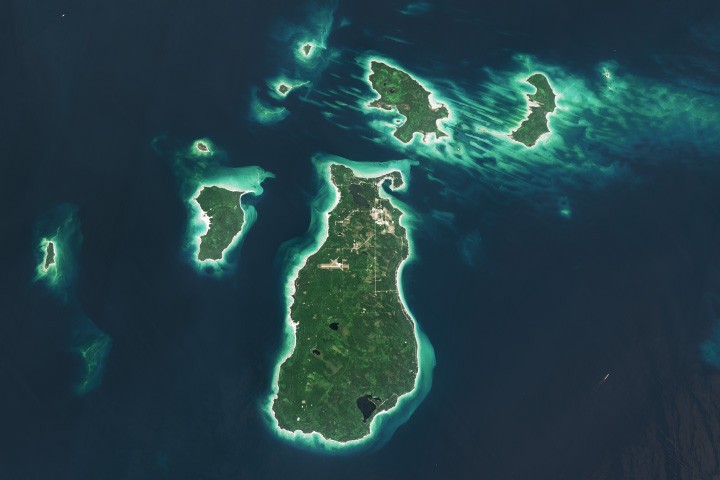
The story of Beaver Island begins thousands of years ago, when a massive ice sheet retreated across the region. This glacier acted like a colossal sculptor, carving north-south trending ridges and valleys into the bedrock of what is now northern Lake Michigan. The Beaver Archipelago emerged where erosion-resistant rock remained above the rising waters. Today, the islands feature upland forests, dunes, wetlands, and marshes—habitats that support rare plant and bird species and crucial fish spawning grounds. The Operational Land Imager (OLI) on Landsat 9 captured a vivid image on August 2, 2024, highlighting the islands' bright sandy perimeters, shallow turquoise waters, and deep blue areas reaching depths of up to 330 feet (100 meters). This satellite perspective reveals the archipelago's distinct linear structure, a direct legacy of glacial scouring.
2. Tracing the Historical Settlement
Beaver Island is the largest island in the archipelago, spanning 13 miles (21 km) in length and 6 miles (10 km) in width. It is also the only inhabited island, with a population of roughly 600 residents, most of whom are of Irish descent. In the mid-1800s, waves of immigrants from County Donegal, Ireland, along with Irish fishermen from nearby Michigan ports, settled here. Their farming and fishing enterprises thrived, and by the 1880s, Beaver Island had become the largest supplier of freshwater fish in the United States. However, overfishing soon depleted the abundant stocks, leading to a sharp decline in the industry. During this period of booming ship traffic, two lighthouses were erected: the Beaver Head Lighthouse on the southern tip (operated 1852–1962) and the Beaver Island Harbor Light on the northern side (first lit in 1870, still active today). These structures guided vessels traveling between Chicago and the Straits of Mackinac and remain iconic landmarks.
3. Planning Your Visit to Beaver Island
Today, travelers reach Beaver Island via ferry or small aircraft. The isolation is part of its charm, offering a peaceful retreat from mainland bustle. Popular activities include biking along scenic roads, fishing in the clear waters, and kayaking around the islands' shores. History enthusiasts can explore the lighthouses and learn about the Irish heritage at local museums. The island's compact size makes it easy to navigate, but it's wise to book transportation in advance—especially during peak summer months. Note that services are limited, so bring essentials like food and appropriate gear. The island's remote character also means minimal light pollution, setting the stage for a celestial experience.

4. Experiencing the Dark Sky Sanctuary
In 2024, the Beaver Island State Wildlife Research Area was designated an International Dark Sky Sanctuary, one of the darkest places in the region. This sanctuary protects the natural nighttime environment, making it perfect for viewing the aurora borealis and the Milky Way. To make the most of your visit, check aurora forecasts and moon phases—new moon nights offer the best conditions. Allow your eyes 15–20 minutes to adapt to darkness, avoid looking at phones, and use red lights for navigation. The sanctuary is accessible from the island's northern parts; follow posted guidelines to preserve the dark sky quality. Even without auroral activity, the starscape is breathtaking, offering a profound connection to the cosmos.
Common Mistakes
Underestimating Weather Variability: Lake Michigan's weather can change rapidly. Always check conditions before traveling and pack layers, rain gear, and sun protection.
Neglecting Transportation Reservations: Ferries and flights have limited capacity, especially in summer. Book weeks ahead to avoid disappointment.
Overlooking Ecological Sensitivity: The island's habitats are fragile. Stay on designated trails, avoid disturbing wildlife, and pack out all trash.
Failing to Prepare for Dark Sky Viewing: Expect cold nights even in summer. Bring blankets, hot drinks, and a red flashlight. Avoid white lights near viewing areas to maintain night adaptation for all visitors.
Summary
Beaver Island, the heart of America's Emerald Isle, offers a rare combination of glacial geology, Irish-American heritage, and pristine natural beauty. From its formation by retreating ice sheets to its fishing boom and subsequent quiet life, the island invites exploration of both its past and present. With the recent Dark Sky Sanctuary designation, it also provides an unparalleled window to the universe. Whether you come for the history, the outdoors, or the stars, Beaver Island rewards those who journey to this remote Great Lakes gem.
Related Articles
- Revolutionary AI Approach Simplifies Complex Inverse Problems in Science
- Before Metal and Fire: How Ancient Containers Shaped Human Survival
- How Scientists Mapped the Hidden Structure of Your Nose's Smell Receptors – A Step-by-Step Guide
- Your Guide to NASA’s SpaceX 34th Resupply Mission: From Launch to Science
- Decoding the $725 Billion Surge: A Guide to Big Tech Capital Expenditure Trends and Cost Analysis
- Next-Generation Mars Helicopters: JPL Engineers Push Rotorcraft Boundaries After Ingenuity's Triumph
- 7 Breakthrough Facts About NASA's Supersonic Mars Helicopter Rotors
- Andrew Forrest Declares War on Fossil Fuels: Fortescue to Lead Australia to 'Real Zero'