Vault Secrets Operator Becomes Recommended Standard for Enterprise Secret Management on Kubernetes
HashiCorp and Red Hat have officially recommended the Vault Secrets Operator (VSO) as the modern, Kubernetes-native standard for automating secret lifecycle management across hybrid clouds. This shift addresses the chronic security gaps that platform teams face when scaling sensitive data delivery in OpenShift and vanilla Kubernetes environments.
“VSO unifies secret generation, injection, rotation, and revocation without slowing down development,” said a HashiCorp product executive. “It’s the first solution that truly meets enterprise governance needs while preserving developer velocity.”
Background
Kubernetes native Secrets have never been designed for enterprise governance. As clusters multiply across clouds, platform teams struggle to move from “how do I get a secret into a pod?” to “how do I manage the entire lifecycle without breaking pipelines?”
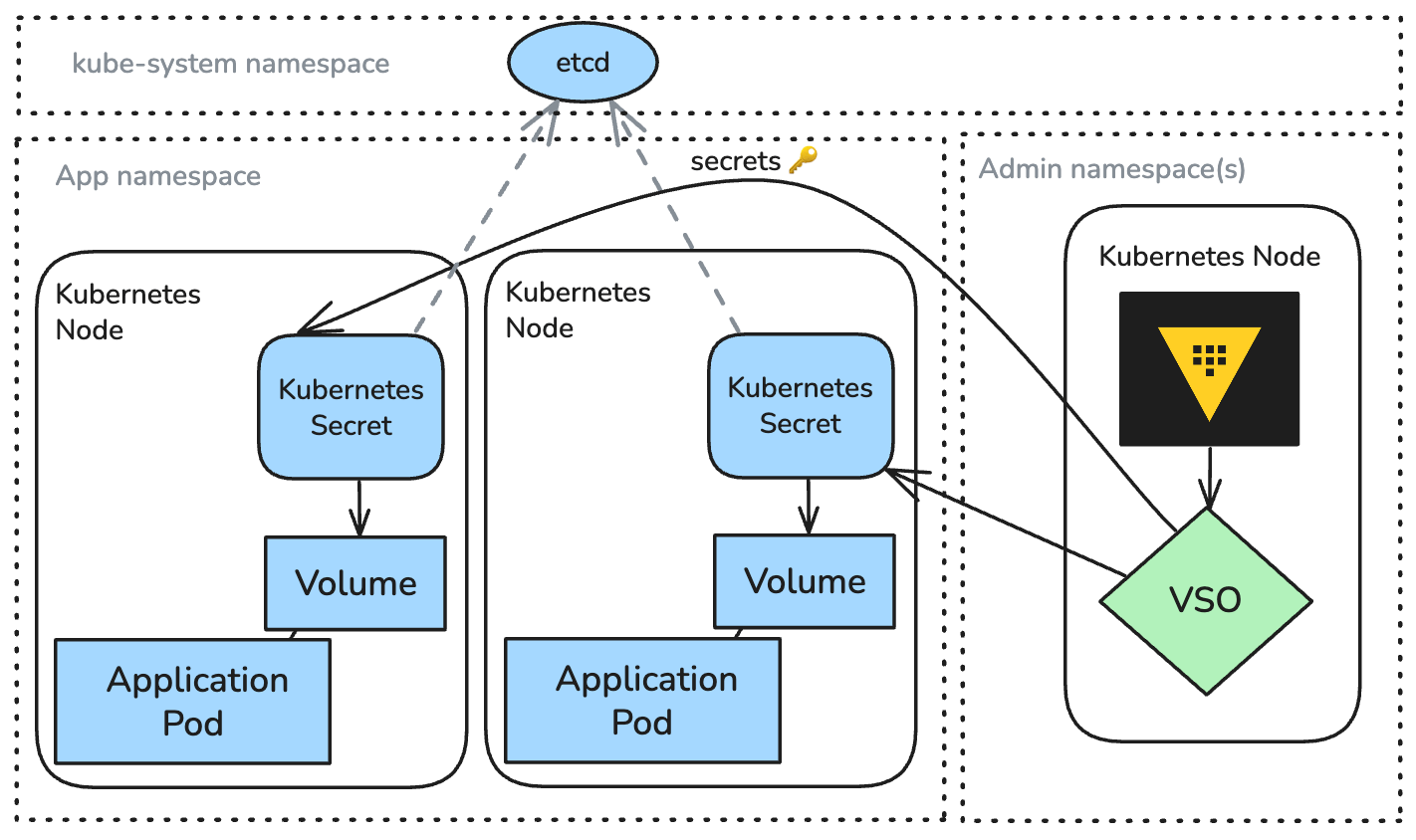
Multiple integration patterns have emerged over the years, each with distinct operational and security tradeoffs. The Vault agent sidecar injector was historically the first robust option, but it introduced complexity and performance overhead. Third-party Secrets operators added fragmentation, while the Secrets Store CSI driver (SSCSI) offered volume-based injection but lacked lifecycle automation.
“The ecosystem became confusing,” explained a Red Hat platform engineer. “Teams needed a clear, scalable path that doesn’t change how pods consume secrets. VSO delivers exactly that.”
What This Means
The recommendation of VSO simplifies secret management for enterprises running Kubernetes or OpenShift. Operators now have a single, centralized pattern that works natively with HashiCorp Vault—already the leading enterprise secrets platform—and integrates seamlessly with existing cluster workflows.
Key benefits include:
- Lifecycle automation – VSO handles secret generation, rotation, and revocation without manual intervention.
- Zero impact on pods – Developers continue using Secrets as before; VSO injects them via custom resources.
- Protected secrets option – VSO Protected Secrets adds a built-in CSI companion driver for even tighter security boundaries.
- Unified governance – Centralized audit trails and access policies replace fragmented per-cluster management.
“This is a game-changer for platform teams,” said a cloud security analyst. “It reduces attack surface, speeds up deployment, and aligns with enterprise compliance from day one.”
Comparison of Integration Methods
- Vault Secrets Operator (VSO) – Recommended standard. Native Kubernetes operator with full lifecycle automation. Best for most enterprise use cases.
- VSO Protected Secrets – Adds CSI driver for ephemeral volumes. Ideal for high-security environments.
- Secrets Store CSI Driver (SSCSI) – Volume-based injection, no rotation. Good for static secrets.
- Vault Sidecar Agent Injector – First robust solution but adds pod overhead. Legacy approach for existing deployments.
- Third-party operators – Fragmented support and varying security postures. Not recommended for new projects.
Enterprises are urged to adopt VSO immediately to close security gaps and accelerate development. The partnership between HashiCorp and Red Hat (through IBM) ensures deep integration with OpenShift, making the transition smoother for existing customers.
“We’re seeing teams migrate from sidecar injectors to VSO in weeks,” noted the HashiCorp executive. “The operational savings are dramatic, and security posture improves overnight.”
Related Articles
- How Russian Hackers Stole Microsoft Office Tokens Through Router Attacks: A Q&A
- Weekly Cybersecurity Roundup: Major Breaches, AI-Driven Attacks, and Critical Patches
- Understanding the TrueChaos Campaign: CVE-2026-3502 and Its Exploitation Against Government Targets
- Fortifying German Businesses Against the Cyber Extortion Surge: A Step-by-Step Defense Guide
- The Epic Saga of Multi-Stage Cyberattacks: Understanding, Detecting, and AI's Dual Role
- Iranian Hacker Group MuddyWater Exploits Microsoft Teams in Sophisticated False Flag Ransomware Campaign
- MacBook Neo Demand Surprise: Q&A with Tim Cook's Insights
- How Russian Hackers Exploited Old Routers to Hijack OAuth Tokens: A Technical Breakdown