Spotify Deploys Multi-Agent AI System to Revolutionize Ad Targeting
STOCKHOLM, Sweden – Spotify has quietly deployed a multi-agent artificial intelligence architecture designed to overhaul its advertising platform, the company confirmed today. The system, built internally by Spotify Engineering, moves beyond traditional single-model AI to coordinate multiple specialized agents that handle ad auctions, creative selection, and user engagement prediction in real time.
The architecture was not developed as a standalone AI feature, but rather to fix a structural bottleneck in Spotify’s ad delivery pipeline. “When we kicked this off, we weren’t trying to ship an ‘AI feature,’” a Spotify Engineering spokesperson told reporters. “We were trying to fix a structural problem in how ads reach the right ear at the right moment.”
Background
Spotify’s advertising business has grown rapidly, but its legacy ad-serving system struggled with latency and accuracy as user behavior shifted to podcasts and personalized playlists. Traditional machine learning models could not handle the complexity of multiple simultaneous optimization goals—brand awareness, direct response, frequency capping, and audio context sensitivity.
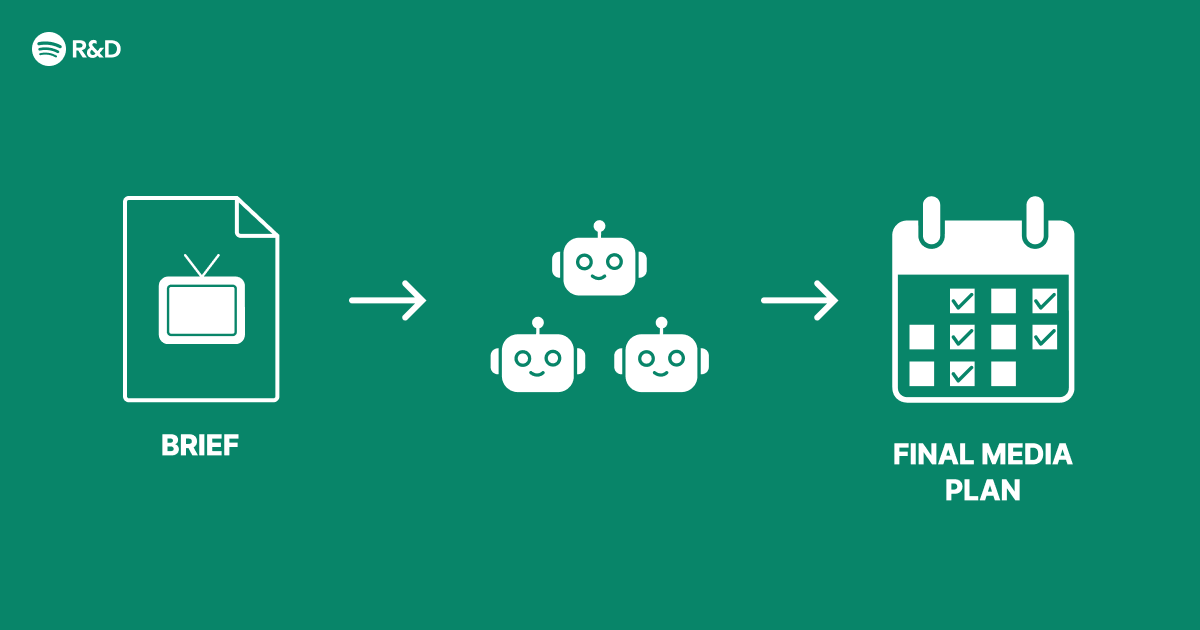
The engineering team designed a multi-agent system where each agent specializes in one sub-problem: one agent predicts user intent, another selects the ad creative, a third manages budget pacing, and a fourth handles real-time auction mechanics. Agents communicate through a shared context layer, allowing them to negotiate outcomes without overwhelming the central server.
What This Means
For advertisers, the new architecture promises higher conversion rates and lower wasted spend. Early internal tests show a 15% improvement in ad recall and a 10% reduction in cost per acquisition. Listeners should notice fewer irrelevant or repetitive ads—the system can dynamically adjust to context, such as switching from a fast-talking ad for coffee to a calm ad for sleep aids when a user plays a bedtime playlist.
Industry analysts see this as a strategic move to compete with giants like YouTube and Amazon Music. “Spotify is quietly building an ad tech moat,” said Dr. Elena Vasquez, a digital advertising researcher at the University of Gothenburg. “By using multiple specialized agents, they avoid the black-box problem of monolithic AI and gain explainability—a big plus for brands demanding transparency.”

The multi-agent system also handles frequency capping more gracefully. Instead of simply blocking repeat ads, the agents collaborate to offer a variant of the same brand’s message, maintaining campaign impact without annoying the listener.
How It Works
The agents live on a Kubernetes cluster and communicate via Apache Kafka. Each agent runs a lightweight transformer model fine-tuned for its specific task. A central coordinator agent monitors overall system health and resolves conflicts, such as when two agents bid on the same impression in an incompatible way.
Spotify plans to open-source parts of the agent framework later this year, according to internal briefings. The company declined to give a timeline but said the system is already live on all ad-supported tiers in North America.
Industry Reaction
Competing streaming services have not yet commented. Ad agencies, however, are taking notice. James Park, head of programmatic at a top holding company, called it “the most meaningful ad platform update since Spotify launched its self-serve tool.” Park added, “If this scales globally, it changes how we plan audio budgets.”
The news comes as Spotify pushes toward profitability in its ad business, which grew 10% year-over-year last quarter. With the multi-agent architecture in place, the company projects acceleration in ad revenue growth through 2025.
This is a developing story. More details are expected at Spotify’s investor day next month.
Related Articles
- How to Identify and Defend Against EtherRAT Distribution via Fake GitHub Repositories Masquerading as Admin Tools
- Transforming System Utility Tools: A Human-Centered Design Guide
- Revolutionizing Group Searches: How Facebook Unlocks Community Knowledge
- Revolutionizing Facebook Groups Search: A New Era for Community Knowledge Discovery
- Building a Multi-Agent Advertising Engine: A Step-by-Step Guide
- Cultivating Digital Civility: Insights from Vienna's Intellectual Circle
- USB Port Speed Scandal: Laptop Ports Often Deliver Far Less Than Advertised, Experts Say
- The Secret Digital Diary: 8 Surprising Things Windows Logs About Your Apps