Chrome M137 Optimizes WebAssembly with Guesswork: Up to 50% Faster Execution
Breaking: V8 Engine Ships Speculative Optimizations for WebAssembly
Google's Chrome M137 update introduces speculative call_indirect inlining and deoptimization support for WebAssembly, delivering dramatic speedups for WasmGC programs.
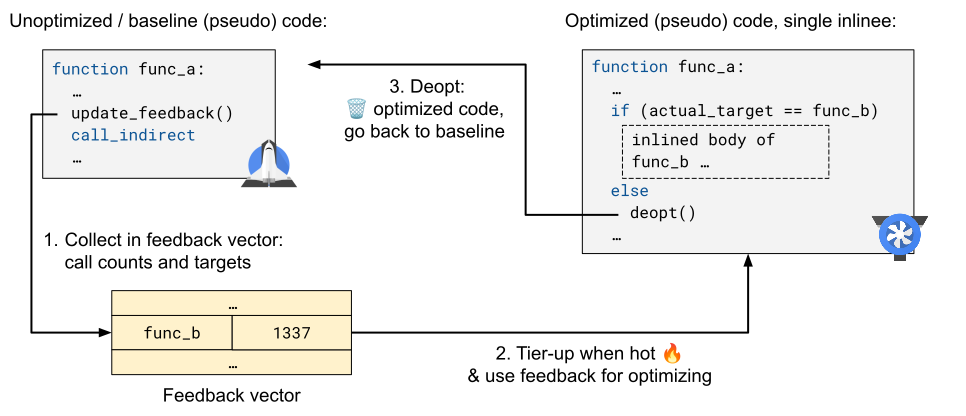
"This combination can generate better machine code by making assumptions based on runtime feedback, resulting in over 50% average speedup on Dart microbenchmarks," explained a V8 team lead.
On larger applications and benchmarks, the gains range between 1% and 8%, with deoptimizations also paving the way for future optimizations.
Background: Why Wasm Needed Speculation
JavaScript's fast execution has long relied on speculative optimizations. JIT compilers like V8 make assumptions based on past feedback—for example, treating a + b as integer addition if integers were seen before.
If those assumptions fail, V8 performs a deoptimization, discarding optimized code and reverting to unoptimized versions. This tier-up mechanism has been critical for JavaScript performance.
WebAssembly 1.0 (2017) didn't require such speculation because static typing and ahead-of-time compilation (via Emscripten or Binaryen) already produced well-optimized binaries. But WasmGC changed the game.
Motivation: WasmGC Demands Smarter Tricks
WebAssembly's Garbage Collection proposal brings high-level features like structs, arrays, subtyping, and rich operations—similar to managed languages like Java, Kotlin, or Dart.
"The generated machine code for WasmGC benefits immensely from speculative inlining and deopt support," noted a V8 engineer. "Without these, the bytecode's abstraction would leave performance on the table."
Inlining and deoptimization together allow V8 to assume certain call targets and types, then bail out gracefully if those assumptions prove wrong.
What This Means
For developers compiling managed languages to WebAssembly, this update means performance that rivals or exceeds native code in many scenarios. Dart and Kotlin/Wasm users will see immediate benefits.
"This is a foundational step," the V8 team said. "Deoptimizations open the door to even more aggressive optimizations in future Chrome releases."
Enterprises using WebAssembly for server-side workloads or complex UIs can expect snappier responses and lower latency, particularly in garbage-collected environments.
As WasmGC continues to standardize, V8's speculative engine positions Chrome as the premier runtime for next-gen WebAssembly applications.
Related Articles
- Flutter and Dart Shine at Google Cloud Next 2026: Key Highlights and Announcements
- Navigating the 2026 Coal Landscape: A Guide to Understanding the Limited 'Return to Coal' Amid the Iran Crisis
- Streamlining Large-Scale Dataset Migrations with Automated Background Agents
- Elevate Your Flutter and Dart Workflows with AI Agent Skills
- Walmart and ABB Launch 400 kW Ultra-Fast EV Chargers: Phoenix First to Get 7 Stations in Nationwide Rollout
- The AUTEUR: A Distraction-Free E Ink Typewriter with Mechanical Keys (Crowdfunding)
- Your Step-by-Step Guide to Catching Northern Lights After a Solar Flare
- How to Refresh Your Desktop with Free May 2026 Wallpapers