GitHub Releases Copilot CLI with Dual Modes: Interactive and Non-Interactive
GitHub’s AI-Powered Command Line Tool Now Offers Two Distinct Workflows
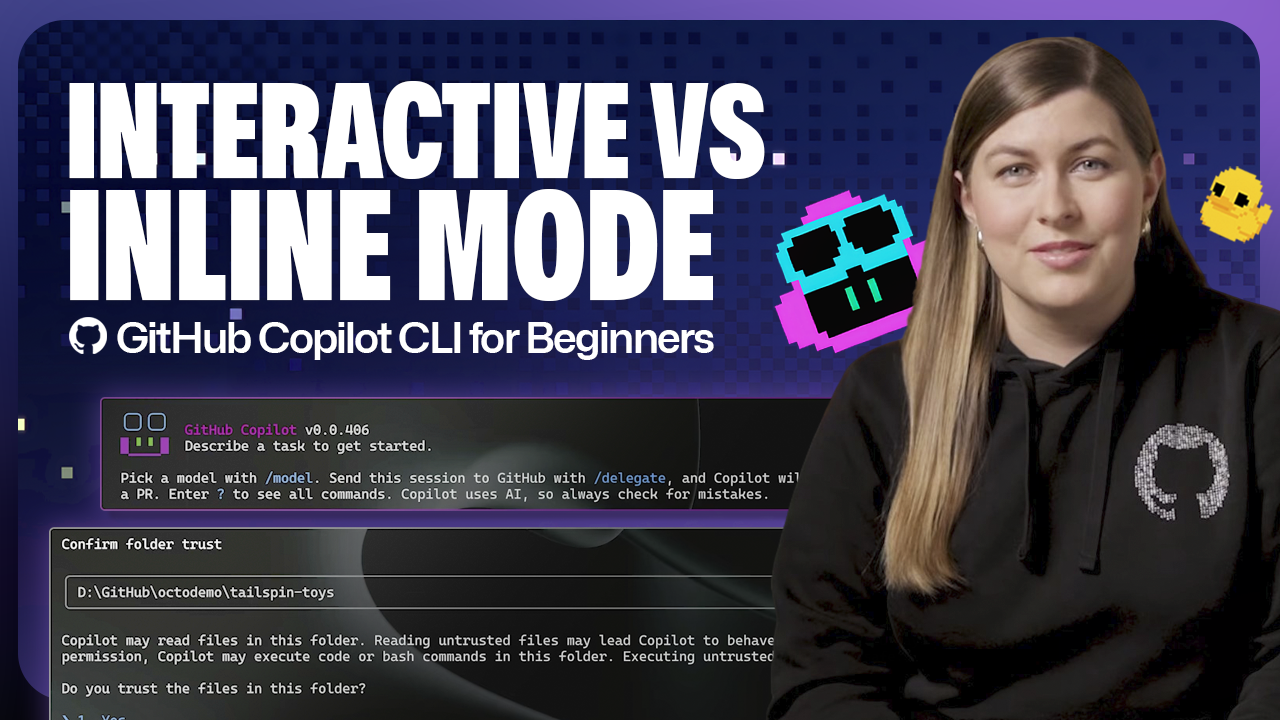
Breaking News – GitHub has officially launched its Copilot CLI with two operational modes—interactive and non-interactive—designed to cater to different development workflows. The tool, which integrates the popular AI code assistant directly into the terminal, aims to boost productivity for developers of all skill levels.
“With Copilot CLI, we’re bringing the power of conversational AI to the command line, but we also understand that not every task requires a back-and-forth dialogue,” said Dr. Elena Torres, a senior product manager at GitHub. “The two modes give developers flexibility: interactive for deep, exploratory work, and non-interactive for quick, focused tasks.”
The announcement comes as GitHub continues to expand its Copilot ecosystem, which already includes IDE plugins and a browser extension. The CLI version targets command-line enthusiasts and developers working in remote or minimal environments.
Interactive Mode: A Chat-Like Session in Your Terminal
Interactive mode launches a persistent session where developers can ask follow-up questions and refine tasks iteratively. It is the default mode when you run the copilot command.
Once inside, users can request project analysis, script generation, or even have Copilot execute commands directly. The assistant reads and modifies files with explicit permission, maintaining context throughout the conversation.
For example, a developer can ask “How do I run this project locally?” and then say “Can you run it for me?” after reviewing the instructions—all in the same session.
Non-Interactive Mode: Speed and Simplicity for One-Shot Prompts
Non-interactive mode is designed for developers who need a single answer without entering a full session. Users append the -p flag to their prompt and receive an instant response.
“This mode is ideal for summarizing a repository, generating code snippets, or integrating Copilot into automated scripts,” Torres explained. “You never leave your shell context—ask, get your answer, and continue working.”
To use it, simply type copilot -p "quickly summarize this repo" at the command line. The tool scans the project files and returns the result immediately.
Background: The Evolution of GitHub Copilot
GitHub Copilot, launched in public preview in 2021 and generally available in 2022, originally existed only as an IDE extension. It uses OpenAI’s Codex model to suggest code in real time. The CLI version has been in beta since early 2024 and now officially ships with these two core modes.

The tool requires authentication via a GitHub account with an active Copilot subscription. It operates with file system permissions to read and modify code, and prompts users to grant trust per project folder.
What This Means for Developers
The addition of both interactive and non-interactive modes gives developers granular control over how they interact with AI assistance. Beginners can ease into exploratory sessions, while experts can integrate quick prompts into existing shell workflows without friction.
Industry analysts see this as a strategic move to make AI assistance ubiquitous across development environments. “The terminal is a fundamental tool for developers, and embedding AI there reduces context switching,” said Marcus Chen, a tech analyst at DevTrends. “The dual modes address the fact that not all tasks are the same—some need deep reasoning, others need immediate answers.”
Developers using the CLI report faster script generation and reduced time digging through documentation. However, some caution that over-reliance on AI may impact learning core command-line skills.
How to Get Started
To enter interactive mode, open a terminal and type copilot. For non-interactive, use copilot -p "your prompt". GitHub provides detailed documentation on both modes.
“We encourage everyone to try both modes and see which fits their style,” Torres said. “The command line is your playground, and Copilot CLI is your new partner.”
Related Articles
- How to Build Accessible Tooltips with the Native Popover API
- Elevate Your Outdoor Adventures with the JBL Clip 5: Compact Power at an Unbeatable Price
- Volcanic Forecasting Breakthrough: Scientists Inch Closer to Predicting Eruptions Like Weather
- Breaking: Design Principles Revolution – Teams Ditch Rigid Rules for Shared Purpose
- Why AI Initiatives Flounder: The Hidden Cultural Barriers
- 5 Powerful Reasons to Enable Pyrefly LSP in PyCharm 2026.1.2
- Building a Multi-Agent AI Framework for Biological Network Modeling and Simulation
- 5 Terminal Power Tools That Eliminated My Need for Graphical Apps