Australia's East Coast Gas Exports: Labor Proposes 20% Domestic Reservation Policy
The Australian Labor Party has unveiled plans to mandate that one-fifth of all natural gas produced on the east coast be set aside for domestic consumption before any exports are allowed. This proposal, known as a gas reservation policy, is intended to secure affordable and reliable energy supplies for local households and industries amid growing concerns over price volatility and export-driven shortages.
Jump to section: What the Plan Entails | Why a Reservation Is Needed | Potential Impact and Reactions
What the Plan Entails
Key Details
Under Labor's proposal, gas exporters operating on the east coast would be required to set aside at least 20% of their production volume for the domestic market. This percentage mirrors a longstanding policy in Western Australia, where a similar reservation has been in place for decades. The plan would apply to all current and future export projects in Queensland, New South Wales, and Victoria, covering both coal seam gas and conventional gas fields.
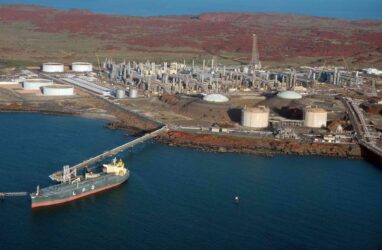
- Applicable volumes: 20% of total east coast gas production reserved for local use.
- Mechanism: Export licences would include conditions requiring domestic supply obligations.
- Monitoring: A compliance regime with potential penalties for non-compliance.
- Timeline: Labor aims to introduce legislation within its first year of government if elected.
Comparison with Western Australia's Model
Western Australia implemented a gas reservation policy in 2006, requiring that 15% of LNG from major projects be sold on the domestic market. That policy has been credited with keeping gas prices relatively lower in WA compared to the east coast, where no such requirement exists. However, critics note that WA's reservation applies only to new projects, while Labor's east coast plan would also affect existing exporters.
Labor's proposal goes further by applying a flat 20% share across the board, aiming to create a more predictable supply environment for local manufacturers, miners, and electricity generators.
Why a Reservation Is Needed
The east coast gas market has experienced significant supply tightness and price spikes in recent years, driven largely by the rapid expansion of LNG export capacity from Queensland's Curtis Island facilities. When global gas prices rose, exporters sold more gas overseas, leaving less for domestic buyers and pushing local prices to record highs.
- Domestic supply shortages: Some large gas users have been unable to secure long-term contracts at viable prices.
- Price escalation: East coast wholesale gas prices have at times tripled those in Western Australia.
- Energy security concerns: Reliance on a volatile global market threatens the stability of electricity generation and industrial processes.
- Investment uncertainty: Without assured supply, new manufacturing projects may be deterred from establishing in the region.
Labor argues that a simple reservation is the most direct way to address these issues, as it does not rely on voluntary codes or complex market interventions.
Potential Impact and Reactions
Economic Implications
Supporters of the plan claim it will lower domestic gas prices by increasing supply and reducing exporters' ability to divert gas to higher-paying overseas buyers. The Australian Workers' Union and manufacturing groups have welcomed the proposal, saying it will help protect jobs in energy-intensive industries such as aluminium smelting, fertiliser production, and brickmaking.

On the other hand, major LNG producers have warned that the policy could discourage new investment in exploration and production. Companies argue that without the prospect of free export access, they may not develop new gas fields, leading to long-term supply decline and eventual shortages. The Australian Petroleum Production & Exploration Association (APPEA) has called the plan "harmful intervention" that could cost the economy billions in export revenue.
Political Landscape
Labor's announcement is a clear departure from the current Coalition government's approach, which has focused on voluntary agreements and market-based solutions. The proposal has become a key election issue, with Labor framing it as necessary to tame energy costs for households and businesses. The Coalition has countered that a reservation is a heavy‑handed measure that would breach trade agreements and deter investment.
Legal experts have noted that such a reservation may conflict with Australia's obligations under the World Trade Organization and certain free trade agreements, but Labor insists it can be designed to comply with existing international law.
Consumer and Community Effects
If implemented, households may see modest reductions in gas bills, but the greatest benefits would likely flow to industrial consumers. Environmental groups have expressed mixed views: while some support the idea of keeping fossil fuels in the ground, others argue that a reservation simply locks in continued reliance on gas, delaying the transition to renewable energy. Labor has emphasised that the policy is a transitional measure to be phased out as clean energy replaces gas over the next two decades.
Conclusion
The gas reservation plan represents a significant shift in Australian energy policy, potentially reshaping the east coast gas market by guaranteeing a domestic supply floor. Whether it delivers on its promise of lower prices and stable supply will depend on how well the policy is designed, enforced, and harmonised with other energy and climate goals. As the debate continues, stakeholders across industry, government, and community are closely watching the details that will emerge in the coming months.
This article is based on information from Renew Economy and additional analysis. Always verify with official sources for the latest policy updates.
Related Articles
- Design Systems Stifle Innovation: Experts Urge Embrace of 'Dialects' to Break Free from Consistency Trap
- 10 Key Facts About Sequans' Bitcoin Sell-Off and Financial Struggles
- Navigating Corporate Pivots: A Case Study on Faraday Future's $70M Robotics Financing
- How DTCC Engineered a 24/7 Tokenized Collateral Platform with Chainlink
- Bitcoin as a Global Reserve Asset: Eric Trump and John Koudounis on $1M Targets and Institutional Shifts
- Aave's New Proposal: Native Bitcoin Borrowing via Babylon in V4 – Governance Snapshot
- 5 Key Developments from Strike’s CEO: Proof-of-Reserves, Volatility-Proof Loans, and a Bold Merger Vision
- 5 Crucial Insights From This Earnings Season That Investors Can't Ignore