New Cambrian Fossil Site Reveals 'Alien' Early Life in Unprecedented Detail
Breaking: Massive Cambrian Fossil Discovery Rewrites Early Life Narrative
A newly unearthed fossil deposit in the Canadian Rockies is providing an extraordinary window into the Cambrian Period, 540 million years ago, challenging long-held assumptions about the complexity of early marine ecosystems.
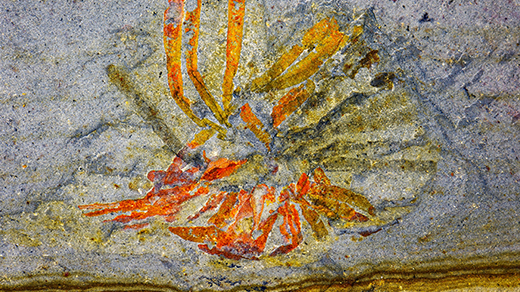
The site, dubbed the 'Kicking Horse Lode', contains thousands of exquisitely preserved specimens, including bizarre, soft-bodied creatures never seen before. Paleontologists say the find could force a fundamental rethinking of the so-called 'Cambrian explosion'.
Discovery Details and Initial Findings
Researchers from the University of Toronto announced the site on Friday. It was accidentally exposed during road construction near Yoho National Park.
'What we have here is a treasure trove of evolutionary experimentation,' said Dr. Maria Chen, lead paleontologist. 'These are not just the ancestors of modern animals; they are forms of life that look almost alien, with appendages and body plans that have no modern analogs.'
Among the standout finds are a phallic-shaped worm that burrowed with surprising agility and a blind, swimming predator that used whip-like tentacles to snare prey. Early versions of mollusks and sponges are abundant, alongside floating jellyfish.
Why This Discovery Matters
The Cambrian Period (541–485 million years ago) marked an unprecedented burst of animal diversity. Most major animal phyla appeared in the fossil record during a span of roughly 20 million years.
This new deposit is unique because it preserves soft tissues—like muscles, gills, and gut contents—in microscopic detail. 'Soft tissue preservation is extremely rare for this age,' explained Dr. Chen. 'It gives us a level of resolution we've never had before on how these early animals lived, ate, and interacted.'
Background: The Cambrian Explosion
For most of Earth's history, life was microscopic. The so-called 'Cambrian explosion' suddenly produced large, complex, multicellular organisms. The most famous Cambrian site is the Burgess Shale (also in Canada), discovered over a century ago.
The Kicking Horse Lode is older than the Burgess Shale by about 10 million years, placing it right at the start of the explosion. This temporal position is critical for understanding the earliest phases of this event.
What This Means for Evolutionary Science
The new fossils suggest that the Cambrian explosion was not a slow, gradual affair but a rapid 'novelty factory'. Many of the bizarre body plans seen here have never been found before, indicating that early evolution was far more experimental than previously thought.
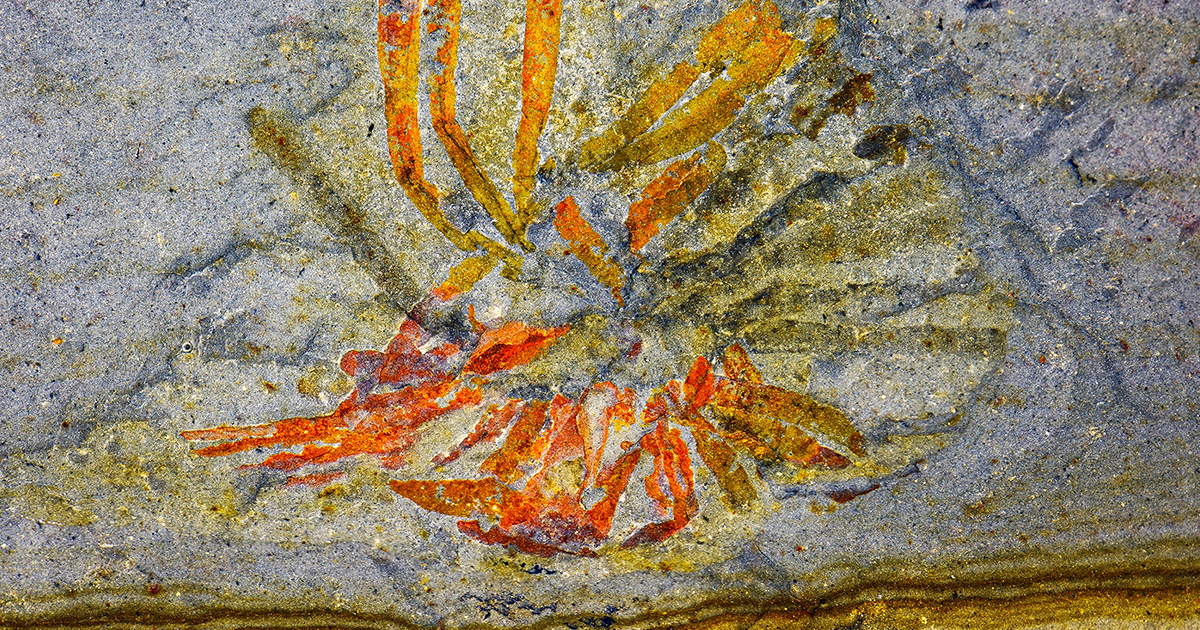
Dr. Chen added: 'We used to think that the Burgess Shale represented the pinnacle of Cambrian diversity. Now we see that even earlier, life was already exploring an astonishing range of designs. Some of these experiments went extinct; others gave rise to everything we see today, including ourselves.'
Next Steps and Ongoing Research
Excavation at the site is ongoing. The team plans to use CT scanning and chemical analysis to study the fossils' internal structures.
'Every day we find something that makes us question our textbooks,' said Dr. Chen. 'This is just the beginning.'
Key Facts at a Glance
- Location: Canadian Rockies, near Yoho National Park.
- Age: Approximately 540 million years old (early Cambrian).
- Fossils found: Soft-bodied creatures, including predatory worms, blind tentacled swimmers, early mollusks, sponges, and jellyfish.
- Preservation: Soft tissue details such as muscles, gills, and gut contents.
- Lead researcher: Dr. Maria Chen, University of Toronto.
- Significance: Provides earliest known evidence of complex animal ecosystems.
Impact on Modern Biology and Future Research
Understanding the Cambrian explosion helps scientists decipher how evolution produced the immense biodiversity of today. The new site may reveal why some body plans succeeded while others vanished.
The findings will be published in the upcoming issue of Nature Geoscience. A preliminary online preprint is available here.
Further reading: Background on Cambrian Explosion | What This Means
Related Articles
- Unraveling Word2vec: A Deeper Dive into Its Learning Process
- The Gentlemen Ransomware Group’s Internal Database Leak Exposes Admin and Affiliate Operations
- Hubble Captures a Galaxy in the Midst of Transformation: NGC 1266
- Ice Cycles May Have Sparked Life's First Cells, Study Reveals
- How Scientists Restored Memory by Targeting a Single Alzheimer's Protein: A Step-by-Step Research Guide
- How AI and the Rubin Observatory Are Decoding Dark Energy Through Supernova 'Standard Candles'
- SpaceX Starship V3: Debut Date Announced for Next-Generation Moon and Mars Rocket
- Mars Gravity Assist: A Step-by-Step Guide to NASA's Psyche Spacecraft Flyby on May 15