Mastering Data Management: Python, SQLite, and SQLAlchemy Explained
This Q&A will test your understanding of how Python, SQLite, and SQLAlchemy work together to provide reliable data storage. You'll revisit key concepts such as primary and foreign keys, SQL operations, and SQLAlchemy models that let you treat your data as native Python objects. Each question below dives into a critical aspect of this technology stack, helping you solidify your knowledge for real-world applications.
1. How do Python, SQLite, and SQLAlchemy integrate to manage data?
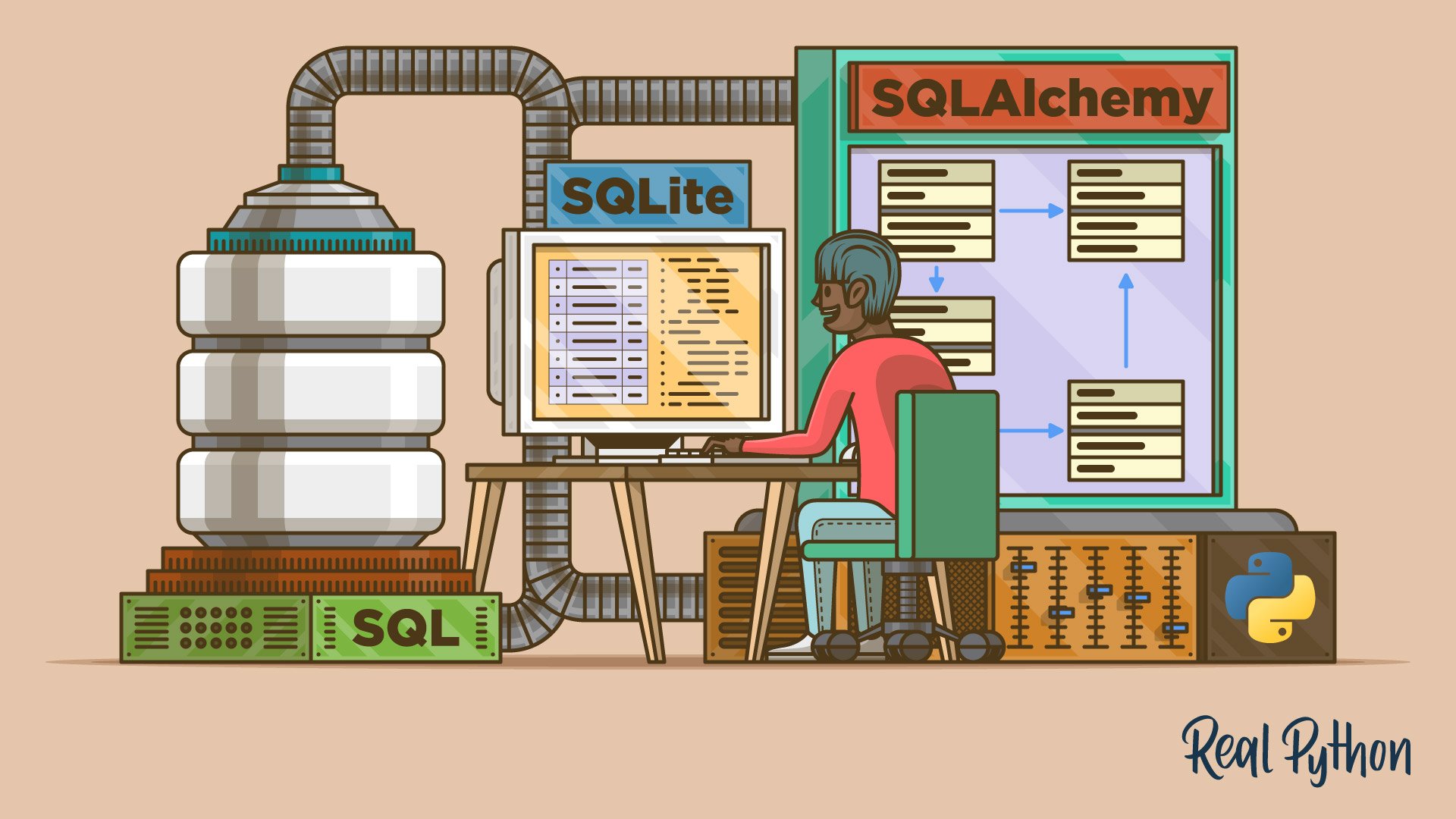
Python acts as the glue that binds SQLite—a lightweight, file-based database engine—with SQLAlchemy, an Object-Relational Mapping (ORM) library. SQLAlchemy provides a high-level Pythonic interface to interact with SQLite without writing raw SQL. It translates Python class definitions (models) into database tables, and Python objects into rows. The integration is seamless: you define models in Python, and SQLAlchemy handles connection management, SQL generation, and result marshaling. For example, a simple User class with attributes id, name, and email becomes a users table. This approach allows developers to focus on business logic rather than database plumbing, while still leveraging SQLite's efficiency for small to medium-sized applications. To dive deeper into how models work, see Question 3.
2. What are primary and foreign keys, and why are they crucial in relational databases?
Primary keys uniquely identify each row in a table. They are typically a single column (like id) or a combination of columns. Foreign keys establish relationships between tables by referencing the primary key of another table. For instance, an Order table might have a customer_id column that refers to the id of a Customer table. These constraints enforce referential integrity, ensuring that every foreign key value exists as a primary key in the referenced table. In SQLAlchemy, you declare these relationships using relationship() and ForeignKey constructs. Without them, your data could have orphaned records, leading to inconsistencies. Using proper keys also enables efficient joins and queries. For a practical example, see the model definitions in Question 3.
3. How do you define SQLAlchemy models to represent database tables as Python objects?
You create a Python class that inherits from declarative_base(). Inside the class, you set __tablename__ to the desired table name. Each column is defined as an instance of Column with a type such as Integer, String, etc. For example:
class User(Base):
    __tablename__ = 'users'
    id = Column(Integer, primary_key=True)
    name = Column(String)
    email = Column(String, unique=True)
To represent relationships, you use ForeignKey and relationship(). For instance, if an Order belongs to a User, you'd add user_id = Column(Integer, ForeignKey('users.id')) in Order, and a user = relationship('User', backref='orders') attribute. Once defined, SQLAlchemy can create the tables automatically via Base.metadata.create_all(engine). This approach lets you work with Python objects while the ORM handles SQL translations.
4. What are the common CRUD operations in SQLAlchemy and how do you perform them?
CRUD stands for Create, Read, Update, Delete. In SQLAlchemy, you use a session object to manage operations:
- Create:
session.add(user)adds a new object, andsession.commit()persists it. - Read:
session.query(User).filter_by(name='Alice').first()retrieves a single object. You can chain filters and use.all()for multiple results. - Update: Modify an object's attributes (e.g.,
user.email = 'new@example.com') then callsession.commit(). - Delete:
session.delete(user)marks the object for deletion;session.commit()removes it.
All operations are performed within a session, which ensures atomicity. For complex queries, you can use filter(), order_by(), and even raw SQL if needed (see Question 5).
5. How can you execute raw SQL queries using SQLAlchemy?
Sometimes you need to run custom SQL that the ORM cannot express elegantly. SQLAlchemy provides engine.execute() for raw queries. For example:
result = engine.execute("SELECT * FROM users WHERE active = 1")
for row in result:
    print(row)
You can also use the text() construct to safely parameterize queries:
from sqlalchemy import text
result = engine.execute(text("SELECT * FROM users WHERE name = :name"), name='Alice')
This approach bypasses the ORM and returns result sets as tuples or dictionaries. However, using raw SQL sacrifices the portability and object-oriented benefits of SQLAlchemy. It's best reserved for performance-critical or complex queries.
6. What are best practices for using SQLAlchemy with SQLite for data storage?
Follow these guidelines to get the most out of the combination:
- Use the SQLite-specific pragmas: Set
PRAGMA journal_mode=WALandPRAGMA foreign_keys=ONduring session creation to improve concurrency and enforce relationships. - Define models with care: Always include a primary key. Use
uniqueconstraints for fields that must be distinct. - Manage sessions properly: Use context managers or dependency injection to avoid connection leaks. In web apps, a session per request pattern is common.
- Optimize queries: Use
eagerloadorjoinedloadto avoid N+1 query problems when accessing relationships. - Test with an in-memory database: For unit tests, use
sqlite://to create a temporary database that vanishes after tests.
Following these practices ensures your application remains maintainable, performant, and reliable.
Related Articles
- 10 Things You Need to Know About Your New AI Coworker (And How to Stay Human)
- 10 Groundbreaking AI Innovations by Students and Young Pioneers That Won OpenAI's $10,000 Prize
- Forgotten 18th-Century Volcano Design Erupts to Life with Modern Technology
- Beyond Women: Why Men Are Also Leaving the Workforce
- Cloudflare Engineers Uncover Hidden ClickHouse Bottleneck Threatening Billion-Dollar Billing Pipeline
- Beyond Temporal Difference: A Divide-and-Conquer Approach to Reinforcement Learning
- 8 Pivotal Shifts That Reshaped Web Design and Development
- Navigating the Coursera-Udemy Merger: A Comprehensive Guide for Learners, Creators, and Enterprises