Mastering GitHub Copilot CLI: A Hands-On Guide to Interactive and Non-Interactive Modes
Overview
Welcome to this comprehensive guide on GitHub Copilot CLI. Whether you’re a seasoned developer or just starting with command-line tools, this tutorial will help you unlock the full potential of Copilot right in your terminal. The CLI offers two distinct modes: interactive and non-interactive. Each serves a unique purpose, and mastering both will significantly boost your productivity. In this guide, you’ll learn what each mode does, when to use them, and how to get started with step-by-step instructions, real-world examples, and common pitfalls to avoid.
Prerequisites
Before diving in, ensure you have the following:
- GitHub Copilot CLI installed – You need a GitHub account with an active Copilot subscription and the CLI tool installed on your machine. Follow the official installation guide for your operating system.
- Basic terminal knowledge – Familiarity with navigating directories and running commands is helpful.
- A project folder – Have a local repository or a sample project ready to test Copilot’s file-reading capabilities.
- Node.js or any runtime – Some examples use server commands; having Node.js installed is optional but recommended.
Understanding the Two Modes
GitHub Copilot CLI operates in two primary ways to suit different workflows:
Interactive Mode: A Conversational Workflow
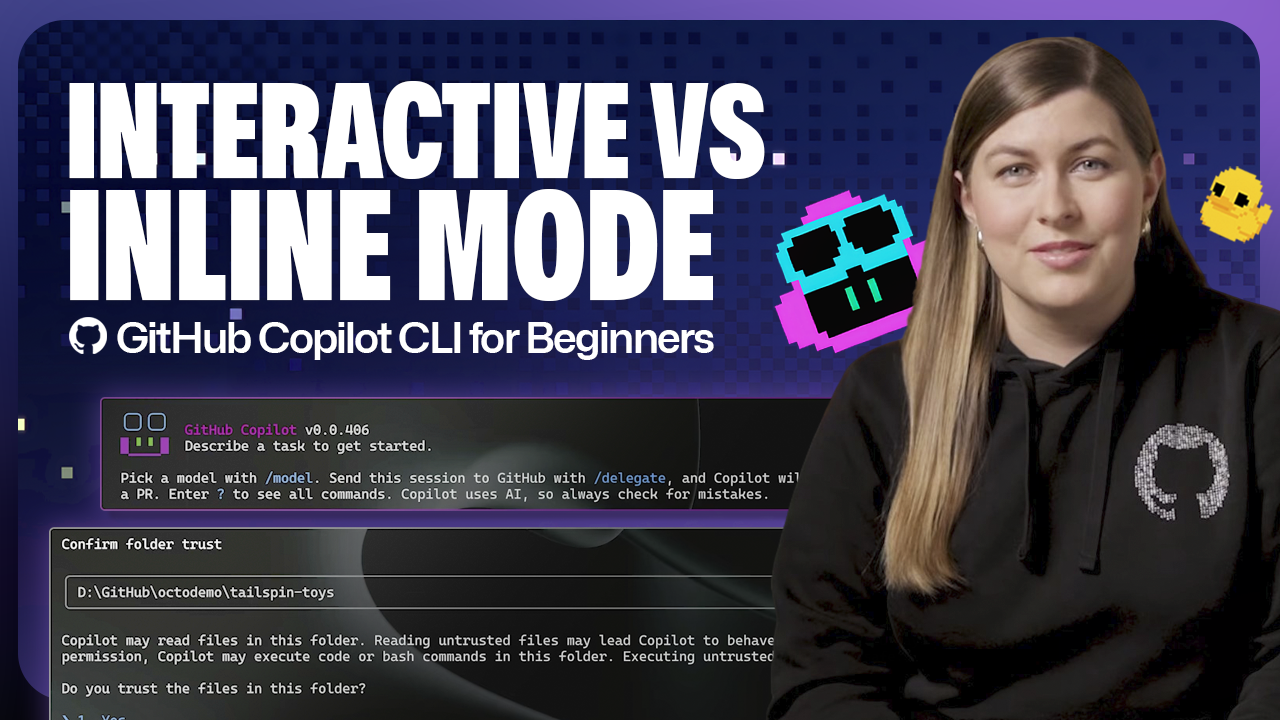
Interactive mode is like having a chat-based assistant embedded in your terminal. When you launch Copilot CLI without any flags, you automatically enter an interactive session. This mode allows you to ask questions, receive detailed responses, and then follow up with additional prompts—all within the same persistent session. It’s perfect for exploring complex tasks, debugging, or iterative problem-solving. You can ask Copilot to explain code, run commands on your behalf (with your permission), or analyze your project structure.
Non-Interactive Mode: Quick, Inline Commands
In contrast, non-interactive mode is designed for speed and simplicity. Instead of starting a session, you pass a single prompt directly in the command line using the -p flag. Copilot responds instantly and then exits, returning you to your shell. This mode is ideal for one-off requests like summarizing a repository, generating a code snippet, or automating routine tasks in a script. There’s no back-and-forth; you get your answer and move on.
Step-by-Step Instructions
Starting Interactive Mode
- Open your terminal and navigate to the project directory you want to work with.
- Type
copilotand press Enter. The CLI may ask for permission to trust the current folder—this is required for Copilot to read and modify files. Typey(yes) to proceed. - Once the session starts, you’ll see a prompt like
Copilot>. You’re now in interactive mode.
Using Interactive Mode (with Examples)
Let’s simulate a common scenario: understanding how to run a project.
- Ask a question: Type
How do I run this project locally? - Copilot analyzes your project files (e.g.,
package.jsonorREADME.md) and provides step-by-step instructions. It might suggest runningnpm installfollowed bynpm start. - Request execution: If you want Copilot to execute commands for you, reply with
Can you run it for me?Copilot will ask for confirmation before running any potentially risky operations. Once approved, it starts the server. - Iterate: While the server is running, you can continue asking questions like
What does the src folder contain?orCan you add a new route?All interactions stay within the same session.
Interactive mode shines when you need to explore, debug, or build incrementally. You’re essentially pairing with an AI developer who never gets tired.
Starting Non-Interactive Mode
- Ensure you are not inside an active Copilot interactive session. If you are, type
exitto return to your regular shell. - Type
copilot -pfollowed by your prompt in quotes. For example:copilot -p "Quickly summarize what this repository does and list key folders." - Copilot processes your request and prints the answer directly to the terminal. You’re returned to the shell prompt immediately after.
Using Non-Interactive Mode (with Examples)
- Summarize a repo:
copilot -p "Summarize this project's purpose and main components" - Generate a code snippet:
copilot -p "Write a Python function to reverse a string"– Copilot outputs the function and you can copy it. - Quick explanation:
copilot -p "Explain the .gitignore file in this directory"
Non-interactive mode is perfect for automating repetitive queries via shell scripts or when you just need a fast answer without context switching.

Resuming a Previous Session
If you accidentally close an interactive session, you can sometimes resume it by checking your terminal history. However, Copilot CLI does not automatically save conversational contexts between launches. A workaround is to copy the key outputs before exiting. For future sessions, you can provide context again. The --resume flag is not currently available in the CLI, so treat each session as a clean slate.
Common Mistakes and Troubleshooting
- Forgetting to trust the folder: When starting interactive mode, Copilot asks for permissions. If you say no, file reading and command execution won’t work. Always answer
ywhen prompted. - Mixing up flags: Interactive mode uses no flag; non-interactive uses
-p. Usingcopilot "my prompt"without-pwill launch interactive mode incorrectly. Always include-pfor one-shot commands. - Asking vague questions: Copilot performs better with specific, context-rich prompts. Instead of “What does this do?”, try “Explain the main algorithm in src/utils.js.”
- Expecting persistent history: There’s no built-in command history across sessions. Keep a record of important outputs manually.
- Running in non-source-controlled folders: Copilot may hesitate to execute commands in folders it doesn’t fully trust. Use projects with a clear structure.
Summary
GitHub Copilot CLI offers two powerful modes that complement each other. Interactive mode provides a rich, conversational environment ideal for deep exploration and iterative development. Non-interactive mode delivers instant answers and is perfect for quick queries or scripting. By understanding when to use each and following the step-by-step instructions above, you can streamline your terminal workflows and harness AI assistance like never before. Start experimenting today—try summarizing a project with non-interactive mode, then dive into interactive mode to make changes side-by-side with Copilot.
Related Articles
- HashiCorp Vault Unveils Native AI Agent Security Framework: Ephemeral, Identity-Based Access Controls Address Autonomous System Risks
- The Strategic Overhaul: Venmo's Transformation and What It Means for You
- Understanding and Defending Against Supply Chain Attacks: A Daemon Tools Case Study
- How to Analyze Apple’s Revenue Guidance for the June Quarter: A Step-by-Step Breakdown for Investors
- 3 Creative Masterpieces Showcasing Apple's Creator Studio: A Deep Dive
- Gateway API v1.5: Major Milestone with Stable Enhancements and Streamlined Release Process
- Windows 11 Run Menu Gets a Modern Makeover: Dark Mode, New Commands, and More
- 10 Things You Need to Know About Reddit's Aggressive App Push Blocking Mobile Web Users